
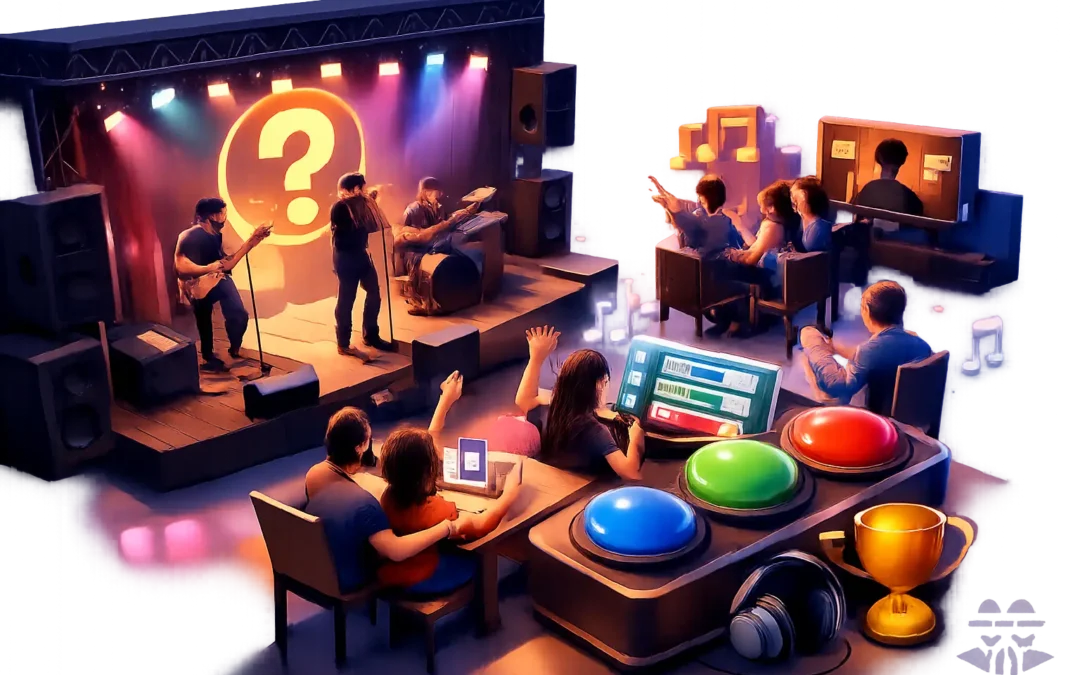
A packed room usually starts with one simple thing – giving people a reason to jump in early. That is why a live music trivia night works so well. It is not passive background entertainment, and it is not the usual trivia format where half the room whispers over answer sheets. It is fast, familiar, social, and built for crowd reaction. When the format is done right, guests are not just sitting through rounds. They are singing, guessing, laughing, competing, and staying engaged from the first question to the last song.
For venues, planners, and hosts, that matters. You are not booking entertainment just to fill time. You are trying to create momentum, keep people in the room, and give a mixed crowd something they can all enjoy without overthinking it. That is where live music trivia earns its spot.
What makes a live music trivia night different
Standard trivia can be fun, but it has limits. It often leans heavily on niche knowledge, long pauses, and a host reading questions into a mic while the energy dips between rounds. A live music trivia night changes the rhythm completely. Instead of relying only on spoken questions, it uses live performance, musical cues, recognizable hits, and crowd interaction to keep the pace moving.
That difference is bigger than it sounds. The second a band plays the intro to a song everyone knows, the room wakes up. People who might never speak up during traditional trivia suddenly have a way in. Maybe they know the artist. Maybe they know the decade. Maybe they can finish the lyric before the next table. The format opens the door to more participation because music reaches people faster than a printed question ever will.
There is also a built-in emotional advantage. Music carries memory. A song from the 80s, 90s, 2000s, or early 2010s can instantly pull people into the moment. That nostalgia creates reactions you cannot fake, and reactions are what turn a decent event into one people talk about later.
Why live music trivia night works for mixed-age crowds
One of the biggest challenges in event planning is pleasing a room full of different personalities and age groups. What works for a younger bar crowd may fall flat at a corporate mixer. What gets one generation excited may lose another in ten minutes. A live music trivia night solves a lot of that because it is naturally flexible.
A good host and band can shape the room in real time. If the crowd lights up for 80s anthems, you can lean into that. If the younger tables start crushing 2000s pop questions, you can bring more of that energy into the next round. If the room is made up of coworkers, clients, and spouses, the format can stay competitive without getting too serious.
That flexibility is a major win for corporate events, fundraisers, private parties, and public venue nights. You are not forcing everyone into one lane. You are building an experience where different people have different moments to shine.
The real value for bars, venues, and event planners
From the outside, live music trivia looks like a fun novelty. From the business side, it is much more useful than that.
For bars and restaurants, it gives guests a reason to arrive on time and stay longer. Traditional live music often builds later in the night. Trivia creates an earlier hook, which can help traffic, food and drink sales, and overall flow. It also encourages repeat visits because people come back with teams, rivalries, and unfinished business.
For private hosts, it solves a common event problem: getting guests to loosen up. Not everyone wants to dance the second they walk in. Not everyone wants a formal game, either. Music trivia hits the middle. It is active without being awkward, and it helps a room warm up naturally.
For planners, it is one of those formats that feels special without becoming complicated. When you have an experienced entertainment team handling both the musical side and the crowd management side, the event feels polished instead of chaotic. That distinction matters more than people realize. The difference between a fun concept and a successful event usually comes down to execution.
Live music trivia night is more than a game
The best events have progression. They start with curiosity, build into energy, and end with a real payoff. That is exactly why this format performs so well.
Early on, guests are listening closely and testing the waters. Then teams start getting louder. More people start singing along. Friendly trash talk picks up. Suddenly the game is not just about correct answers. It becomes a live shared experience with momentum.
That momentum can lead anywhere you want it to. In a venue setting, it can roll right into a dance set. At a wedding after-party or private event, it can bridge cocktail-hour energy into full-party mode. At a corporate function, it can break down the usual table-by-table stiffness and get people interacting beyond their departments or friend groups.
That is one of the biggest strengths of live music trivia. It is not boxed in. It can be the main event, or it can be the spark that gets the rest of the night moving.
What separates a good format from a forgettable one
Not every music trivia event lands. Some drag. Some feel too complicated. Some lean so hard into obscure questions that half the room checks out.
The strongest version keeps things recognizable, fast, and entertaining first. The questions should challenge the room without punishing it. The music should be broad enough to connect with different groups. The host has to read the crowd, keep the pace up, and know when to push the energy higher.
Just as important, the live band cannot feel like decoration. The performance side has to matter. A few bars of a song, a lyric cue, a genre twist, a battle round, or a crowd singalong can all make the difference. People should feel like they are at a show and a game at the same time.
That blend is where experienced live entertainers have the edge. Running a packed dance floor and running an interactive room are not exactly the same skill, but they come from the same place: understanding audience energy. When the people on stage know how to guide a crowd, the whole format gets sharper.
Where this format fits best
A live music trivia night can work in more places than people expect, but the goal of the event should shape how it is used.
In a bar or restaurant, it is ideal for building a recurring weeknight draw. It gives regulars something fresh without losing the familiarity of a live-music crowd. In a corporate setting, it works well as a team-building format that does not feel forced. People can participate at their own comfort level, which is a big advantage over more structured games.
For private celebrations, it depends on the crowd. If guests love music, nostalgia, and a little competition, it can be a huge hit. If the event is meant to stay formal and low-key, a full trivia format may not be the right fit. That trade-off matters. Great entertainment is not about choosing the flashiest option. It is about choosing the one that suits the room.
In markets like New York, New Jersey, Philadelphia, and Connecticut, where audiences have seen plenty of standard event formats, live music trivia stands out because it feels fresh without being risky. It is familiar enough to pull people in and different enough to make the night memorable.
Why execution matters more than the idea
A lot of event concepts sound strong on paper. Fewer actually carry a room for two hours.
Live music trivia succeeds when the team behind it knows how to balance pacing, song selection, hosting, sound, and audience flow. Too much talking, and it drags. Too much music without structure, and it stops feeling like trivia. Too many hard questions, and guests check out. Too easy, and the competition disappears.
That balance is what turns the concept into a real event product. It should feel organized but never stiff. Competitive but never tedious. Musical but never random.
That is why entertainment buyers tend to trust groups that already know how to work different rooms – weddings, bars, corporate events, private parties, theme nights. A format like this benefits from range. A band that can shift gears, read demographics, and keep momentum moving is always going to have an advantage.
If you are considering a live music trivia format for your venue or event, think beyond the word trivia. The real question is whether you want guests to sit back or jump in. If you want a room that sings, laughs, competes, and stays engaged, this format earns its keep fast. And when it is done by a team that understands both showmanship and event flow, it does more than fill the schedule – it gives the night a pulse.
Recent Comments