
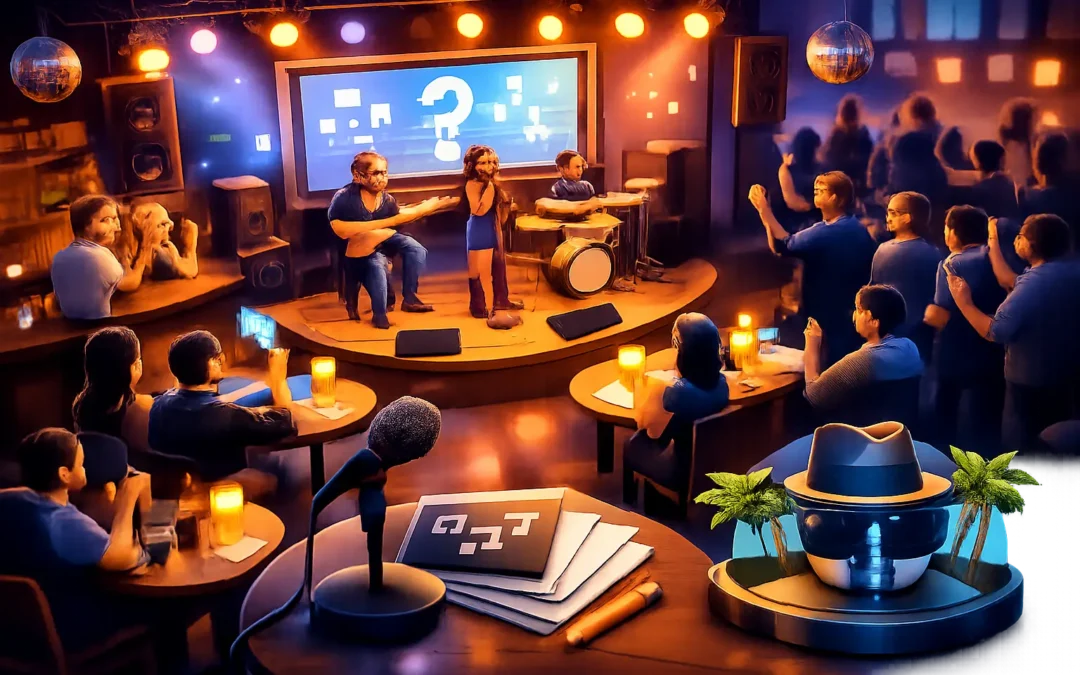
A great music trivia night should not feel like a test with a speaker in the corner. It should feel like a party that happens to have scorecards. If you are figuring out how to run live music trivia, start with the real goal: get people singing, arguing playfully over song titles, cheering for the right answer, and sticking around for one more round.
That is what makes live music trivia different from a standard bar quiz. The band is not background noise. The musicians, host, songs, pacing, and crowd banter all work together to create a show. Done right, it gives a venue a packed room, gives planners an easy win, and gives guests something they will talk about after the final score is announced.
Build a Live Music Trivia Format People Can Follow
Keep the rules simple enough that a first-time player understands them before the first song starts. Teams of two to six people work well for most rooms. Smaller groups keep the energy competitive, while larger tables are easier to manage at corporate events or private parties where guests arrive in built-in groups.
A reliable format is four rounds of eight to 10 questions, with a short performance break between rounds. That usually fills a two-hour event without dragging. Play a live snippet, ask a question, give teams a clear window to write their answer, then move on. The key is momentum. If the room spends more time waiting than listening, the fun disappears fast.
Mix question types so the strongest music nerd at the table cannot carry every point alone. Ask for the song title on one clip, the artist on the next, then switch to a lyric finish, a decade question, a movie soundtrack connection, or a rapid-fire name-that-tune challenge. A few questions that reward general pop-culture knowledge help keep the whole room involved.
For a high-energy finale, make the last round worth more points, but do not make it so valuable that it erases two hours of good play. Double points are usually enough. The goal is drama, not a scoring system that makes every earlier answer feel pointless.
Choose Songs Guests Know in Their Bones
The best live music trivia questions are recognizable within seconds. That does not mean every song has to be obvious. It means each round needs a mix of easy wins, medium challenges, and a couple of questions that make the room groan, laugh, and say, “I know this!”
Start with crowd-tested material: 80s singalongs, 90s throwbacks, classic rock hooks, Motown, dance-pop, country crossovers, and current favorites that work for your audience. At a wedding-adjacent celebration or a mixed-age corporate event, familiar songs beat deep cuts almost every time. At a themed 90s night, you can go more specific because the room came ready for it.
Use the live band to make the clues more fun. A recognizable guitar intro, a drum pattern, a single line of a chorus, or a stripped-down acoustic version changes the game. Just be consistent. If one question uses a five-second intro and another uses a full verse, teams may feel like the difficulty is random.
Before the event, test every clip with someone who did not write the questions. If they cannot hear the clue clearly or the answer could reasonably be two different songs, revise it. Trivia should challenge guests, not make them debate the host’s wording.
How to Run Live Music Trivia Without Losing the Room
The best question set in the world will fall flat if the room setup is working against it. Every guest needs to hear the clip, see the question when necessary, and understand when answers are due. That means checking sound levels from the back of the room, not just from the stage.
For a bar or venue, put answer sheets and pens on tables before the first round. For a larger corporate event, consider numbered team cards, projected questions, and a designated person at each table to turn in answers. Digital answer systems can work, but only if the Wi-Fi is dependable and the crowd is comfortable using phones. Paper is still fast, simple, and surprisingly hard to break.
Set expectations early. Tell teams whether spelling matters, whether they need both song and artist, and whether phones are off the table. A phone-free rule creates better participation, but it needs to be enforced with a light touch. The point is not to police a room full of adults. The point is to protect the game and keep the answers from appearing on a screen before the chorus ends.
Lighting matters more than many hosts expect. Keep enough light on tables for writing, while preserving the feeling of a live show around the stage. A room that is too dark creates frustration. A room that is fully bright can kill the party atmosphere.
Let the Host Drive the Energy
A live music trivia host has two jobs: make the game clear and make the room feel alive. They should explain the rules in under two minutes, repeat only the instructions that matter, and keep the banter moving between questions. Long explanations are a momentum killer.
The host also needs to read the crowd. If the room is crushing an artist-identification round, raise the difficulty a little. If everybody is stumped three questions in a row, give a hint or follow it with an instant singalong. The best hosts are not locked into a script. They are running a show.
Build in moments for the band to interact with players. Ask a table to sing the next lyric. Celebrate the team that nailed a tough answer. Play a quick victory sting when a round ends. If a group is loudly debating a song, let the room enjoy it for a beat before revealing the answer.
Keep answer reveals brisk. Play the key hook again, announce the answer, give a quick fun fact only when it adds something, and move forward. A ten-second story about a song can add personality. A two-minute history lesson can empty the dance floor.
Score Fairly, Then Make the Prize Worth Chasing
Assign one point for most standard questions and make scoring easy to verify. If teams must name both artist and title, say whether each is worth a point or whether they need both for credit. Consistency prevents the kind of end-of-night argument nobody wants.
Use one or two scorekeepers, depending on room size. They should have a printed answer key that includes acceptable alternate answers. “The Boss” for Bruce Springsteen, for example, may be funny, but decide in advance whether it earns the point.
Prizes do not need to be expensive. Venue gift cards, a round of drinks where appropriate, event-branded gear, or a simple trophy can create plenty of competition. The prize is really a prop for the celebration. Announce winners with energy, bring them toward the stage if the space allows, and give the room a reason to cheer.
Avoid the Mistakes That Turn a Party Into Homework
The biggest mistake is making every question difficult. People came out to have fun, not prove they own the most vinyl. Give the room enough easy recognition moments to build confidence, then place harder questions where they create excitement instead of frustration.
Another common miss is overloading the night with rules, categories, and bonus mechanics. A clever format is only clever if guests can follow it while holding a drink, talking to friends, and listening to a band. Keep the game clean and the transitions tighter.
Finally, do not treat the musicians as a playlist. Live music trivia works because the performance has personality. Give the band room to play, react, and turn a correct answer into a full-room chorus. For venues across New York, New Jersey, Philadelphia, and Connecticut, that flexible showmanship is often the difference between a quiet weeknight and a date guests mark on the calendar.
When the final standings are announced, do not let the night simply end. Hit one last song everybody knows, invite the whole room to sing it, and let the trivia give way to the party it was built to create.
Recent Comments