
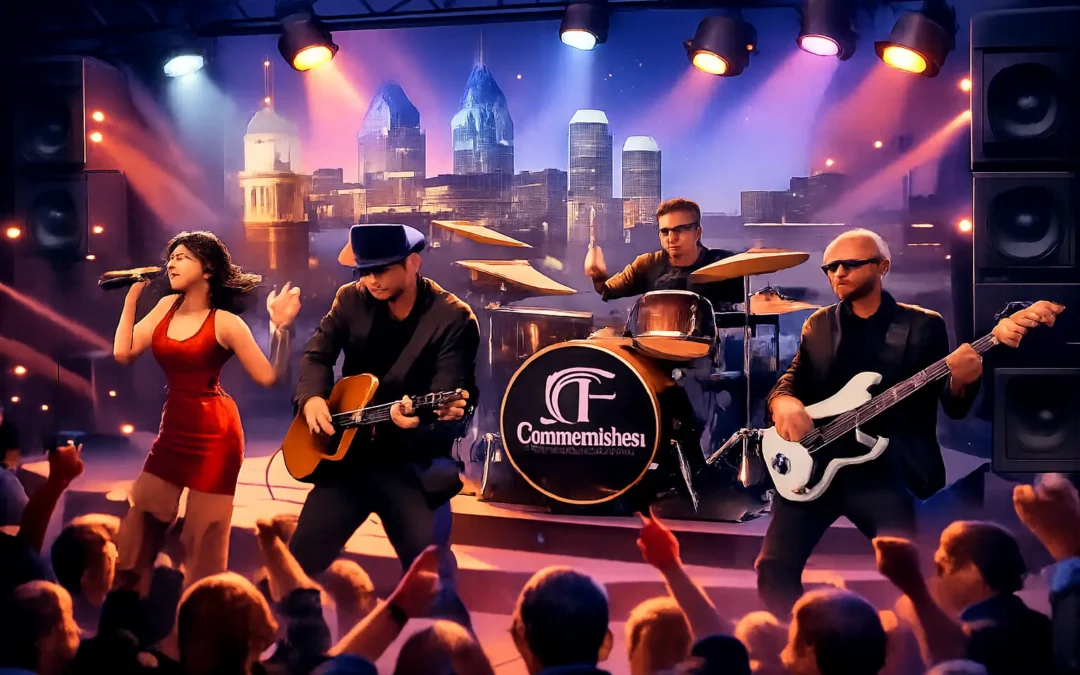
A packed dance floor does not happen because a band knows a few popular songs. It happens when the first note lands, the right people hear something they love, and the room decides it is time to stop talking and start moving. That is the real job of Philadelphia cover bands at weddings, corporate events, fundraisers, and busy venue nights.
Philadelphia crowds know good live music. They bring different generations, different tastes, and plenty of opinions to the same room. Your entertainment has to meet that challenge head-on: recognizable songs, confident performers, smart pacing, and a show that feels built for the people actually in front of the stage.
What Great Philadelphia Cover Bands Actually Deliver
A cover band should do more than recreate a playlist. The best acts read the room and shape the night around it. At a black-tie wedding, that may mean a polished cocktail set followed by a dance set that gets grandparents, college friends, and coworkers out at once. At a company party, it may mean starting accessible, building energy after dinner, and delivering a finale people talk about on Monday.
Song selection matters, but sequence matters just as much. A great song in the wrong moment can flatten momentum. An experienced party band understands when to drop a singalong, when to pivot from disco to rock, when to bring back the ’80s, and when the crowd is ready for a current hit. The goal is not to show off a giant song list. The goal is to make every transition feel like the obvious next move.
That is especially valuable for mixed-age events. A DJ can offer unlimited tracks, but a live band gives familiar music a pulse and a personality. The guitar riff hits harder, the vocals pull people in, and the room responds to real performers responding right back. For clients who want the energy of a concert without asking guests to know unfamiliar music, a high-level cover band is a strong bet.
Start With the Kind of Night You Want
Before comparing bands, get clear about the outcome. “We want music” is a starting point. “We want everyone dancing after dinner” is a useful brief. “We need a professional act that can handle a gala audience, make announcements cleanly, and keep the party moving until the end” is even better.
A wedding couple may want elegance early and full-on celebration later. A venue operator may need a dependable act that drives repeat traffic and keeps a Friday crowd in the room. A corporate planner may need clean presentation, easy communication, and music broad enough for guests who range from new hires to senior leadership. Those are different rooms, and the show should reflect that.
Think about the event’s peak moment, too. Is it a first dance that needs to feel personal? A final song that sends guests out shouting the chorus? A themed night where every song needs to support the concept? The clearer that picture is, the easier it is to find a band with the right format.
Look for Range, Not Just a Long Song List
Many bands can play crowd favorites. Fewer can move naturally between genres and decades without losing the audience. That difference becomes obvious over a four-hour celebration or a long night at a bar.
A versatile act can make room for Motown, classic rock, pop, country, dance, hip-hop, and the big ’80s and ’90s songs that turn a casual crowd into a chorus. Range does not mean cramming every genre into one set. It means having enough depth to serve the room without making the night feel scattered.
Themed events raise the stakes. An ’80s night should feel like an ’80s night from the first keyboard hook to the final encore. A ’90s party needs more than one or two nostalgia songs between current hits. Decades shows work when the wardrobe, pacing, production, and setlist all support the idea. If you are booking for a theme, ask whether the band has performed that format repeatedly, not whether they can put together a few songs on request.
There is also a practical trade-off. A specialist tribute-style act can be perfect when the theme is the entire point of the event. A broad party band is usually the better choice when the guest list is diverse and the main goal is a full dance floor. Neither is automatically better. It depends on what success looks like for your audience.
The Moments Between Songs Matter
Guests remember a band’s energy, but planners remember whether the night ran smoothly. A polished act knows how to make introductions, coordinate with the event timeline, communicate with the venue, and keep breaks from draining the room.
That does not mean the performance should feel stiff or scripted. It means the band is prepared enough to be relaxed when it counts. The best entertainers can make a room feel spontaneous because the logistics behind the scenes are handled.
Ask how the band approaches special requests, first dances, announcements, dinner music, and load-in. Ask whether the musicians who appear in promotional footage are the musicians who will perform at your event. Ask who is your point of contact before the event and who leads the room on the night itself. Straight answers are a good sign.
Match the Band to the Room
The size and shape of the venue influence what will work. A ballroom can support a bigger stage show, full sound, and lighting that transforms the room after dinner. A shore bar may call for a more immediate, high-volume party set that catches people walking in from the boardwalk. An outdoor celebration needs thoughtful planning around power, weather, sound limits, and staging.
Do not assume louder means better. The right volume changes throughout the event. Guests should be able to talk during cocktails and dinner, then feel the lift when the dance set begins. A professional band manages that arc without forcing your planner, venue manager, or guests to intervene.
For corporate events, presentation deserves extra attention. The band should look appropriate for the brand and setting, whether that means formal attire, a polished party look, or a custom theme. For public venues, personality and crowd interaction can matter even more. The band is not just background entertainment. It is part of why people stay for another round.
Ask the Questions That Protect Your Event
A great demo reel can get your attention, but the booking conversation tells you whether an act is ready for your event. You want clarity on timing, production, personnel, song flexibility, and contingency planning.
When speaking with Philadelphia cover bands, ask about their typical event flow, how they handle a packed dance floor, and what they do when the crowd is not responding to the original plan. Ask what sound and lighting they provide, what they need from the venue, and how early they arrive. If the event is high-stakes, ask what happens if illness, travel, or equipment issues arise.
Also ask for examples that resemble your event. A band that thrives at large weddings may also crush a corporate gala, but it is fair to ask how they adapt the show. Experience is not just the number of years on a stage. It is the ability to recognize the room, solve problems quickly, and keep the celebration moving without making the client manage the entertainment.
Build the Entertainment Around Your Guests
The most successful events make guests feel considered. That can mean adding a live band karaoke segment for a team that loves to perform, creating a music trivia round for a more interactive cocktail hour, or building a late-night set around the songs your group grew up with. These additions work best when they fit the crowd rather than feeling like a novelty bolted onto the schedule.
The Counterfeiters approach every format with the same goal: make the room feel alive. Sometimes that calls for a polished full-band party show. Sometimes it is a decades-driven theme night, an interactive karaoke experience, or a set designed to keep a venue crowd engaged from the first drink to last call. Flexibility gives planners more ways to create an event people want to stay for.
The strongest entertainment choice is the one that makes your guests forget they are checking the time. Give your band a clear picture of the room, trust experienced performers to build the momentum, and leave space in the schedule for the party to become what it is supposed to be: loud, joyful, and impossible to leave early.
Recent Comments