
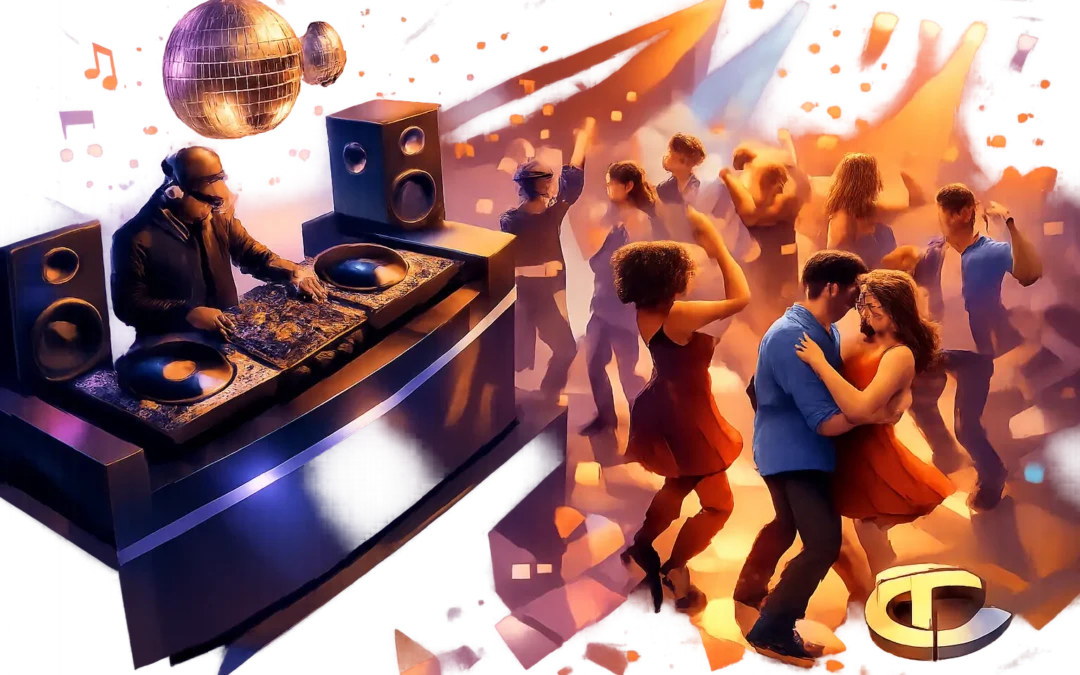
A packed dance floor usually comes down to one thing – playing the right song at the right moment. The best songs that keep guests dancing are not always the newest, the trendiest, or even the most musically impressive. They are the tracks people recognize fast, feel comfortable moving to, and want to sing with a room full of other people.
That sounds simple until you are staring at a mixed crowd. You have college friends, parents, coworkers, that one uncle who only wants classic rock, and a bride or host who definitely does not want the night to feel flat after dinner. This is where experience matters. Great party music is less about personal taste and more about momentum, familiarity, and reading the room.
What songs that keep guests dancing actually have in common
The songs that work night after night usually share a few traits. First, they get to the point. Long intros, slow builds, and niche deep cuts can be fun in the right setting, but they are risky when your goal is to fill the floor quickly. Big hooks win.
Second, they create a group reaction. People dance longer when they feel like they are part of something, not when they feel like they are being tested on their music knowledge. A track that gets guests singing the chorus together will usually beat a technically cooler song that only a few people know.
Third, the groove has to be clear. That does not mean every song needs a four-on-the-floor club beat. It means the rhythm should be easy to catch whether someone is a real dancer or just two drinks in and ready to commit.
The trade-off is that crowd favorites can feel obvious on paper. But obvious is not a weakness at an event. Obvious is often exactly what keeps the floor full.
The songs that keep guests dancing across age groups
If you want broad appeal, you need songs that bridge generations instead of serving one lane. At weddings, corporate events, and big private parties, that usually means mixing disco, pop, rock, 90s and 2000s throwbacks, and a few modern hits that younger guests expect.
Here are 25 reliable picks that consistently work in live or DJ-style party sets:
- Uptown Funk – Mark Ronson featuring Bruno Mars
- I Wanna Dance with Somebody – Whitney Houston
- September – Earth, Wind & Fire
- Shut Up and Dance – WALK THE MOON
- Billie Jean – Michael Jackson
- Don’t Stop Believin’ – Journey
- Yeah! – Usher
- Dancing Queen – ABBA
- Mr. Brightside – The Killers
- 24K Magic – Bruno Mars
- Livin’ on a Prayer – Bon Jovi
- Shake It Off – Taylor Swift
- Yeah! – repeated? No, keep one only
- Twist and Shout – The Beatles
- Superstition – Stevie Wonder
- Friends in Low Places – Garth Brooks
- Sweet Caroline – Neil Diamond
- Party in the U.S.A. – Miley Cyrus
- Get Lucky – Daft Punk featuring Pharrell Williams
- Crazy in Love – Beyoncé featuring Jay-Z
- Jessie’s Girl – Rick Springfield
- Man! I Feel Like a Woman! – Shania Twain
- Everybody – Backstreet Boys
- We Found Love – Rihanna
- Footloose – Kenny Loggins
- Poison – Bell Biv DeVoe
- Proud Mary – Tina Turner
That exact lineup is not a formula for every event. It is a strong example of songs with proven crossover power. Some crowds will go harder for 80s pop. Others will light up when 90s hip-hop and 2000s party tracks hit. The key is not just having hits. It is having the right mix of hits for the people in the room.
Why timing matters more than the song itself
A great song can still miss if it lands in the wrong spot.
Early in the night, guests are testing the waters. This is when feel-good, medium-to-high energy songs work best. Think “September,” “I Wanna Dance with Somebody,” or “Shut Up and Dance.” These tracks invite people in without making it feel like the party skipped three levels too fast.
Once the floor is active, you can raise the energy with bigger singalongs and punchier party records. “Yeah!,” “24K Magic,” and “Crazy in Love” tend to hit hardest when people are already moving and looking for the next push.
Later in the night, familiar anthems become even more powerful. This is where songs like “Don’t Stop Believin’,” “Livin’ on a Prayer,” and “Mr. Brightside” can turn a solid dance floor into a full-room moment. They are not subtle, and that is exactly the point.
There is also a pacing issue a lot of people miss. If every song peaks at the exact same level, the set starts to feel one-note. The strongest event bands and DJs know when to let the room breathe for a minute before slamming into the next big chorus.
Wedding crowds need more than just wedding songs
Wedding clients often ask for songs everyone knows, which is the right instinct. But that does not mean the night should feel like a tired wedding playlist from ten years ago.
The best wedding dance floors usually blend timeless records with a few more current or unexpected choices. A run from “Dancing Queen” into “Uptown Funk” into “Yeah!” can work because each song speaks to a different pocket of the room while still keeping the energy up. Grandma knows one, the bridal party loses it on another, and everyone meets in the middle.
Couples should also think about guest behavior, not just favorite songs. A song you love in the car might not bring people together on the dance floor. Meanwhile, a song you have heard a hundred times may be exactly the one that gets cousins, college friends, and parents dancing at once.
If you are hiring live entertainment, this is where versatility matters. A band that can jump from Motown to 80s to 2000s to current pop without losing momentum has a huge advantage over a one-lane act.
Corporate events have a different job to do
At a corporate party, people are usually more cautious at first. They are around coworkers, managers, clients, and plus-ones. So the first wave of dance music has to be accessible, upbeat, and low-risk.
This is why songs like “September,” “Billie Jean,” “Superstition,” and “I Wanna Dance with Somebody” are such reliable openers. They feel fun, polished, and familiar without forcing anyone too far out of their comfort zone.
As the event loosens up, the set can get bolder. “Everybody,” “Yeah!,” and “Party in the U.S.A.” often do well because they break that last bit of hesitation and turn the room from polite to fully engaged.
Corporate clients also benefit from cleaner set planning. Not every crowd wants explicit lyrics, hard-edged club music, or songs with highly specific cultural appeal. It depends on the company, the venue, and the guest list. The safest choice is not always the best choice, but reading the audience is everything.
Live band performance changes the equation
A song that crushes with a live band is not always the same song that crushes from a playlist.
Live music adds energy, interaction, and flexibility. A band can stretch a chorus, punch up a breakdown, call for crowd participation, or pivot if the room starts leaning in a different direction. That is a major reason certain classics stay unbeatable in live settings. “Proud Mary,” “Sweet Caroline,” and “Livin’ on a Prayer” become less about the original recording and more about the shared room experience.
This is also why experienced party bands keep more than one lane ready to go. A black-tie crowd in Connecticut may respond differently than a summer crowd at a Jersey Shore venue or a corporate event outside Philadelphia. The songs can overlap, but the delivery, sequencing, and intensity should adjust.
For a band like The Counterfeiters, the win is not just playing popular music. It is knowing how to move from one era, style, or energy level to another without killing the floor.
How to build a set that keeps people dancing longer
Start with recognition. If the first few dance songs are too niche, you make guests work too hard. Then build in waves. Give them disco, pop, rock, throwback hip-hop, and singalong moments instead of hammering one style for an hour.
It also helps to think in reactions. Some songs make people dance. Some make them sing. Some make them run to the floor from the bar. The strongest sets use all three.
And be honest about your crowd. If your guest list skews 40-plus, a wall of current Top 40 is probably a mistake. If your room is younger and loves nostalgia, 2000s hits may outperform 70s classics. There is no perfect universal list. There is only the right set for that room, that night, and that moment.
When people talk about a great event, they usually do not say the musicians were technically flawless or the playlist was clever. They say the dance floor was packed all night. That happens when the music feels familiar, the energy keeps climbing, and every song gives guests one more reason to stay out there a little longer.
Recent Comments