
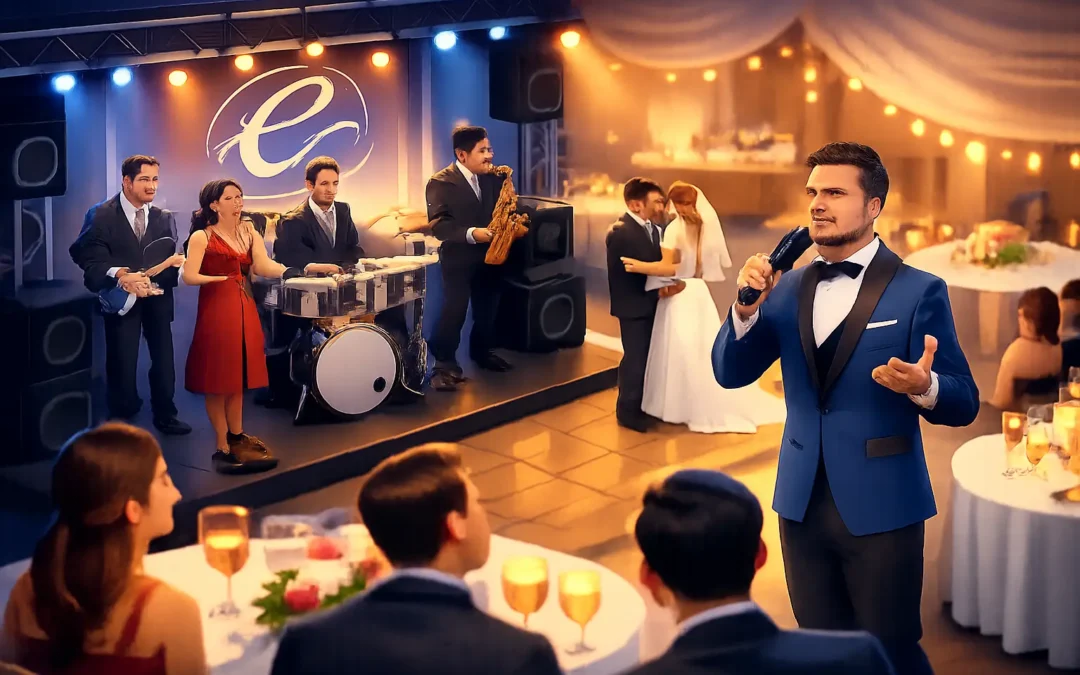
The room is full, cocktails are wrapping up, the couple is ready to make an entrance, and somebody has to take the reins. That is usually where people ask: can a live band emcee reception moments and keep the whole night moving? The short answer is yes. The better answer is yes, if the band knows how to do more than play great songs.
A reception is not just a concert with centerpieces. It is a series of live moments that need energy, timing, and a steady hand on the mic. Introductions, first dances, parent dances, toasts, dinner transitions, cake cutting, open dancing, and the final send-off all have to land at the right time and with the right tone. A strong live band can absolutely emcee that flow. In many cases, they can make it feel more natural and more exciting than a separate host.
Can a live band emcee reception duties well?
Yes, but this is where experience matters.
Any band can say names into a microphone. Not every band can read a room, coordinate with planners and photographers, keep formalities from dragging, and shift from polished announcements into a packed dance floor without killing momentum. That is the difference between a band that performs songs and a band that runs entertainment.
When a live band emcees well, the reception feels tighter. Guests know what is happening without feeling like they are being bossed around. The introductions feel big. The transitions feel smooth. The dance set starts hot instead of awkward. That kind of pacing is a real skill.
The best bands understand that emceeing is not about hearing themselves talk. It is about making every important moment clear, upbeat, and quick enough to keep the energy alive.
What a band emcee actually does at a reception
A professional band emcee usually handles the public-facing flow of the night. That often includes introducing the wedding party, welcoming guests, cueing the couple’s first dance, moving the room into toasts or dinner, announcing special moments, and calling guests back to the dance floor.
There is also a behind-the-scenes side that matters just as much. A seasoned band leader is often coordinating with the planner, venue staff, photographer, videographer, and caterer to make sure key moments happen on schedule. If dinner is running late or the speeches need to move up, the emcee adjusts the language and timing without making it obvious to guests.
That flexibility is a big reason couples and planners like having one entertainment team handle both the music and the announcements. There are fewer handoffs, less confusion, and a better chance of keeping the room focused.
When a live band is the better emcee choice
A live band can be the stronger option when the event is built around energy and guest interaction. Weddings with a lively crowd, mixed age groups, and a dance-heavy reception often benefit from having the same team guide the formalities and launch the party.
Why? Because they control the room’s mood in real time. They can build anticipation during introductions, hit the exact musical cue for an entrance, bring the volume down for a toast, and then kick right back into a dance set. That kind of control is tough to beat when one team is steering both the soundtrack and the microphone.
It also helps when the couple wants the night to feel polished but not overly scripted. A great band emcee can keep things classy without sounding stiff. They know when to hype the room and when to get out of the way.
For many East Coast weddings, especially in markets like New York, New Jersey, Philadelphia, and Connecticut, that balance matters. Couples want a reception that moves like a real event, not a stop-and-start program.
When a separate emcee or DJ may make more sense
This is where the honest answer matters: it depends.
If the reception has a very complicated timeline, multiple languages, a long list of cultural traditions, or highly customized announcements throughout the night, a dedicated emcee may be the better fit. The same is true if the couple wants a host with a very specific personality or style that goes beyond standard reception management.
Some bands are incredible musically but keep their stage banter minimal by design. That is not a flaw. It just means their strength is performance, not event hosting. If a band does not routinely emcee receptions, forcing them into that role can make the night feel less polished.
The smart move is not to assume every live band should emcee. It is to ask whether that specific band has the presence, structure, and event experience to do it well.
How to tell if a band can emcee a reception confidently
Start by asking direct questions. Do they handle wedding party introductions? Do they make announcements throughout the night? Who is the lead emcee? How do they coordinate with planners and venues? What happens if the timeline changes on the fly?
Their answers should sound clear and practiced, not vague. You want specifics. A band that regularly emcees receptions will talk about timing, cues, names, pronunciation checks, communication with vendors, and how they keep moments moving.
It also helps to ask about style. Some couples want high energy and a lot of crowd play. Others want short, clean announcements and more focus on the music. A good band can adapt, but only if that conversation happens before the event.
If you watch videos, pay attention to more than the songs. Listen to how they speak to the room. Are they confident? Clear? Warm? Do they sound like pros who can hold the crowd for 20 seconds and then let the night breathe? That tells you a lot.
The biggest advantage: momentum
The strongest case for having a live band emcee reception events is momentum.
Receptions lose steam when too many people are controlling different parts of the night. One person announces. Another person cues music. Someone else tries to gather guests. Then dinner runs late, and now everybody is waiting around. That is how even a beautiful wedding starts to feel clunky.
When the entertainment team knows the timeline and owns the transitions, things move faster and feel more connected. Introductions hit harder. Special dances feel intentional. Open dancing starts before guests drift back to their tables or phones.
That is not a small detail. It can be the difference between a nice reception and a room that feels electric.
Where bands sometimes get it wrong
Not every band should promise this service.
The most common mistake is over-talking. Guests do not want a wedding turned into a comedy set or a running monologue. Another issue is lack of preparation. Mispronounced names, missed cues, and awkward timing can undercut the formal parts of the night fast.
There is also the question of tone. A bar-band voice does not always fit a black-tie ballroom. On the flip side, a too-formal delivery can flatten the energy at a party built for dancing. Great emceeing is about reading the room and matching the moment.
That is why couples should not just ask, can a live band emcee reception duties. They should ask, can this band do it in a way that fits our crowd?
The best setup for couples and planners
The sweet spot is a band that treats emceeing as part of overall event execution, not as an add-on. That means they are prepared, organized, and comfortable leading key moments while still keeping the spotlight where it belongs.
The best teams will gather names in advance, review the timeline, confirm must-play moments, coordinate with other vendors, and keep announcements crisp. Then, when it is time to actually perform, they switch gears and do what great party bands do best – fill the floor.
That balance is what separates a solid wedding band from a real reception driver. It is also why multi-format entertainment groups often have an edge here. They are used to managing more than one kind of crowd experience, which makes them better at shifting between host mode and show mode.
A band like The Counterfeiters, for example, is built around that kind of versatility. Not every event needs the same level of emcee presence, and the right entertainment team knows how to scale it up or keep it lean.
If you want a reception that feels alive from the first entrance to the last song, ask less about whether a live band can handle the mic and more about whether they can carry the whole room. That is the version of emceeing that guests actually remember.
Recent Comments