
A full dance floor does not care what category the band checked on a contract. Your guests care that they recognize the opening riff, sing the chorus, and stay in the room when they could be heading for the bar or the valet. Still, the cover band versus tribute band question matters when you are planning the kind of event where the music sets the entire tone.
Both can deliver a great night. The better choice comes down to one thing: do you want a broad, all-night party soundtrack, or do you want guests to step into the world of one iconic artist, era, or sound?
Cover Band Versus Tribute Band: The Core Difference
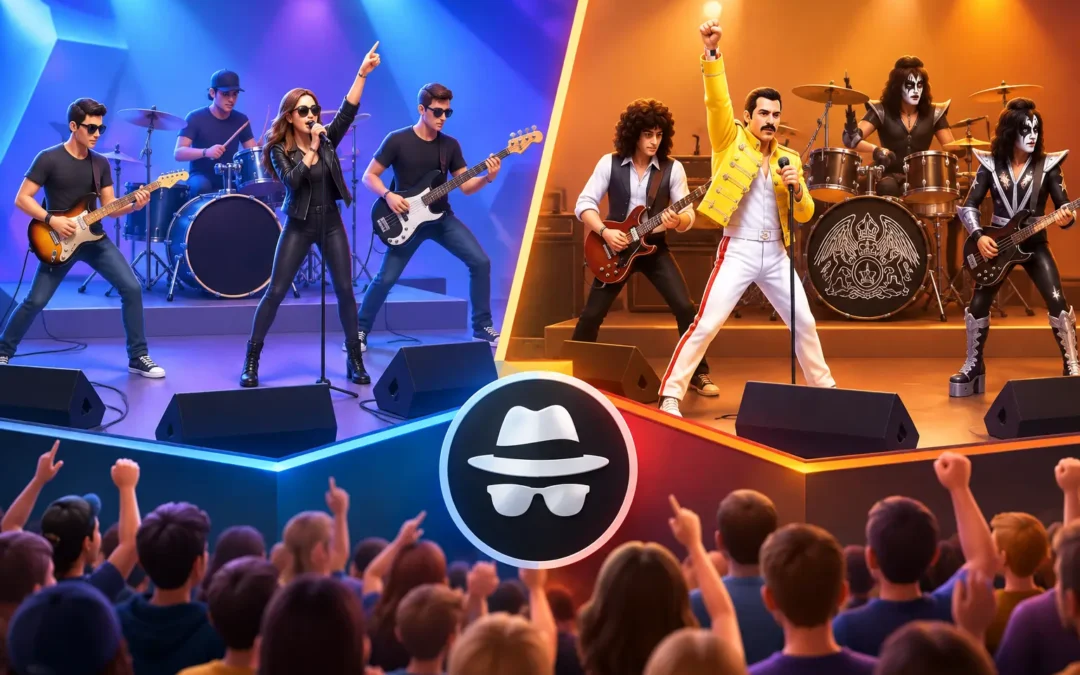
A cover band performs songs made famous by many different artists. Think of a set that moves from Stevie Wonder to Bon Jovi, then from Beyoncé to Bruno Mars, with a little country, classic rock, disco, and 90s thrown in when the room calls for it. The goal is variety, momentum, and songs that connect across a mixed crowd.
A tribute band focuses on recreating a specific artist, group, or highly defined musical experience. It may be a faithful salute to Queen, The Eagles, Journey, Taylor Swift, or a particular decade. The strongest tribute acts often mirror the original artist’s sound, stage look, arrangements, and energy as closely as possible.
Neither format is automatically better. They are built for different jobs. A tribute act delivers focus and fandom. A cover band delivers range and flexibility.
When a Cover Band Wins the Room
For weddings, corporate celebrations, fundraisers, milestone birthdays, and most private events, a cover band is usually the safest bet. Those events bring together people with different ages, musical tastes, and ideas about what makes a great night. Your college friends may want 2000s pop-punk. Your parents may be waiting for Motown. Your coworkers may light up when the band hits a current pop anthem.
A quality party band can read those shifts in real time. If the dance floor fills up for 80s singalongs, the band can lean into that lane. If a younger crowd responds to hip-hop, pop, or 90s dance hits, the next set can move there without losing the room. That ability to pivot is a major advantage when the guest list is broad.
The best choice for mixed-age celebrations
A wedding reception has a different assignment than a concert. The band needs to create moments for the couple, their parents, the bridal party, the coworkers, and the friends who came ready to dance until the last song. A wide-ranging setlist gives everyone a reason to get involved.
The same applies to corporate events. Unless the event is specifically themed around one artist or musical era, planners generally want entertainment that feels inclusive rather than niche. Familiar hits from multiple decades help a room of clients, employees, executives, and guests find common ground fast.
More control over the event flow
Cover bands can also support the full arc of an event. They can provide polished cocktail-hour music, handle special dances, make announcements, build toward peak dance-floor moments, and adjust pacing around dinner, awards, speeches, or surprise presentations.
That does not mean every cover band offers every service. Ask what is included and how the band manages transitions. But the format itself is naturally adaptable. A party band can play the right song for the right moment instead of trying to fit every moment into one musical theme.
When a Tribute Band Is the Right Call
A tribute band can be a knockout choice when the theme is the main event. If your venue is promoting a ticketed summer concert, a casino is programming a themed weekend, or a client wants an immersive 70s rock night, the specificity becomes the selling point.
People buy tickets to tribute shows because they already have an emotional connection to the music. They want to hear the signature songs, recognize the visuals, and sing along with a room full of fellow fans. The audience arrives primed for the experience.
A strong tribute band also makes promotion easier for public venues. “A night of Billy Joel” is an immediate idea. Guests know what they are getting, and the marketing has a natural hook. For a bar, theater, festival, or club trying to fill a room around a defined concept, that clarity can be powerful.
The trade-off is musical range
The same focus that makes a tribute act exciting can limit its usefulness at a general party. Even the biggest fan of a particular artist may not want four hours of one catalog at a wedding or company gala. And guests who do not connect with that artist may spend more time talking than dancing.
That is not a knock on tribute bands. It is simply the difference between a show designed around a fandom and entertainment designed around a varied crowd. If your event is really a concert, book the tribute experience. If it is a celebration with a concert-level dance floor, a versatile cover band often has the edge.
Questions to Ask Before You Book
Start with the room, not your personal playlist. Who will be there? What do you want them doing most of the night? How important is a specific theme? The answers tend to point you in the right direction.
Ask each act how they build a setlist, how they handle requests, and whether they can adjust once they see the crowd. For a cover band, find out how deep the repertoire goes across decades and genres. For a tribute band, ask how authentic the production is and whether the show includes the songs fans expect.
You should also ask about the practical pieces that separate a good band from an easy event partner: arrival time, sound support, break schedule, attire, space requirements, insurance, and coordination with your venue or planner. A great performance starts well before the first downbeat.
For themed events, there may be room for a hybrid approach. A band can build an 80s, 90s, disco, yacht rock, or decades-focused show without being limited to one artist’s catalog. That option gives guests a clear theme while preserving enough variety to keep the night moving.
Choose the Experience, Not Just the Label
The labels can be useful, but they are not the whole story. Some cover bands are loose and casual. Others are polished, high-energy entertainment teams that can shape an entire event. Some tribute acts are talented musicians playing familiar songs. Others deliver a full-scale production that turns a venue into a destination for fans.
Watch live video, listen for vocals, and pay attention to crowd reaction. Does the band look comfortable leading a room? Do they have the energy to carry a long reception or a packed venue night? Most importantly, can they deliver the experience you are promising your guests?
For clients who want broad appeal with serious party energy, The Counterfeiters build sets around the songs and moments that get people out of their seats. For a dedicated artist night, a great tribute act may be exactly the headline your audience wants.
Your event only gets one opening song. Choose the band format that makes the next move obvious: people heading straight for the dance floor.
Recent Comments