
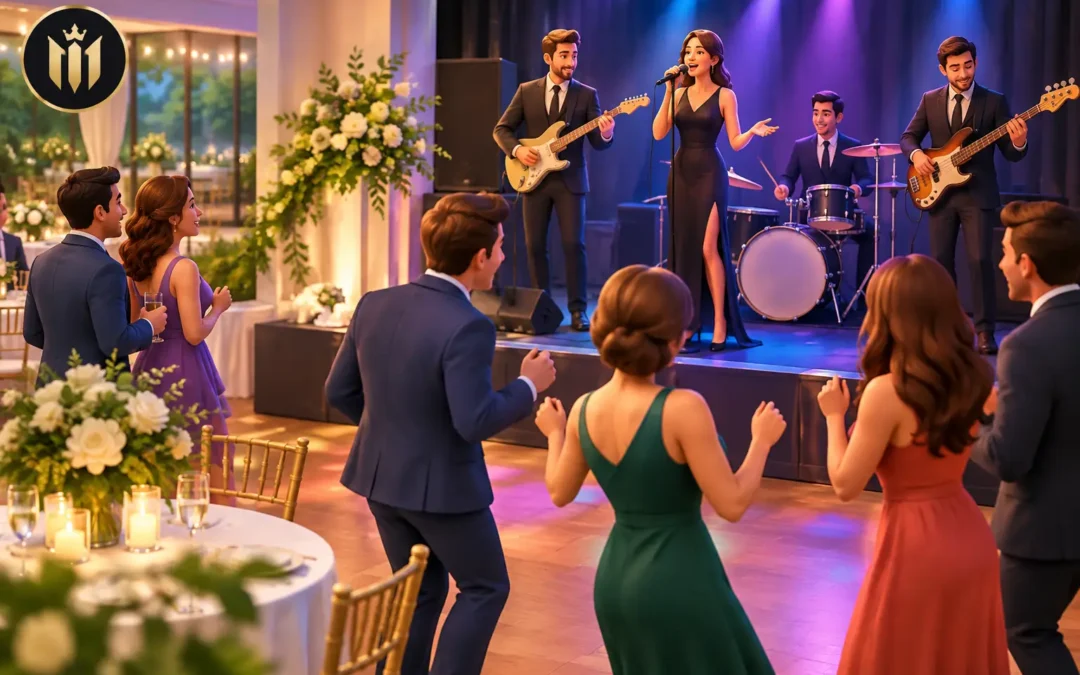
A great wedding reception has a moment when the room changes. Dinner plates clear, the formalities wrap up, and suddenly your guests are singing a chorus they have known for 20 years. That moment does not happen by accident. If you are asking when should a reception band start, the best answer is usually not “the minute guests arrive.” It is when the timeline gives people a real reason to get up and stay up.
For most weddings, the live party set should begin immediately after dinner, toasts, and any first-dance moments you want the full room to see. But every reception has its own rhythm. A cocktail-heavy celebration, a late-night crowd, a venue with strict timing, or a couple who wants a packed dance floor before dinner can all call for a different plan.
When Should a Reception Band Start? The Short Answer
Plan for your reception band to begin its high-energy dance set after dinner and formalities, typically 90 minutes to two hours after cocktail hour begins. That is the sweet spot for many weddings: guests have arrived, eaten, had a drink, and are ready to party without watching the clock.
A typical evening might look like this: cocktail hour begins at 6:00 p.m., guests enter the reception room around 7:00 p.m., dinner and speeches run until about 8:30 p.m., and the band kicks into the first big dance set at 8:30 or 8:45. If your reception ends at 11:00, that leaves plenty of runway for a real party.
The key distinction is this: your band may be working well before its first dance-floor set. Many bands provide ceremony music, cocktail-hour music, reception entrances, background dinner music, and special dances. “Band start time” can mean several different things, so make sure your contract and timeline spell out exactly what is covered.
Build the Energy Instead of Blowing It Early
The fastest way to flatten a reception is to go full-throttle too soon. If the band launches into dance-floor anthems while guests are still finding their tables, greeting relatives, or waiting for dinner, the songs may be great but the room will not be ready.
That does not mean the room should be silent. It means the music should match the moment. During guest arrival and dinner, live musicians or a polished playlist can create atmosphere without competing with conversation. Once the formal events are done, the band can make the entrance that matters: a recognizable opener, a strong groove, and a clear invitation for everyone to join the party.
A professional party band reads the room, but a smart timeline gives them the best possible room to read. You want your first big set to meet guests at their peak, not ask them to party before they have had a chance to settle in.
The First Dance Changes the Timing
If you are doing a first dance, parent dances, or a wedding party dance, decide whether they will happen before dinner or after it. Both options work, but they create very different energy.
Doing special dances right after your grand entrance is classic and efficient. Guests are gathered, the photographer gets the big moments early, and dinner can follow. In this format, the band often plays or performs background music through dinner, then brings the dance floor back to life after toasts.
Saving the first dance for after dinner can be a bigger show moment. The room is full, the lights can shift, and the band can build straight from your song into a full dance set. This is a strong choice for couples who want the first dance to feel like the official start of the party.
There is no wrong choice. Just avoid scattering formalities throughout the entire night. Every interruption makes it harder to rebuild the floor, especially once guests have finally found their favorite song and their second wind.
A Reception Timeline That Keeps the Dance Floor Moving
The strongest timelines group the formal parts of the reception together, then protect long stretches of uninterrupted live music. Guests should not feel like they are being called back to their seats every 20 minutes.
Here is a reliable structure for a five-hour reception:
- Cocktail hour: Light live music, a smaller band format, or music that feels social and upbeat without demanding the dance floor.
- Reception entrance and dinner: A high-impact entrance, followed by music at a volume that still lets guests talk and eat.
- Special dances, speeches, and toasts: Keep these moments organized and reasonably tight, ideally before the main party set.
- First dance set: The band opens strong once the formalities are complete and stays focused on songs that bring different generations together.
- Late-night finish: Save a few undeniable singalongs and big closers for the final stretch, then end while the room still wants one more.
This format works because it respects your guests’ attention. Older relatives can enjoy dinner and key traditions. Friends who came ready to dance get a real block of party time. And the band gets the chance to do what you hired them to do: build momentum song by song.
What Time Should the Band Arrive and Set Up?
The band’s performance start time is not the same as its arrival time. A full live band needs adequate access, load-in time, setup, and soundcheck before guests are in the room. At a hotel ballroom with easy loading access, that may be straightforward. At a city venue with stairs, shared elevators, tight parking, or a venue that flips a ceremony space into a reception space, it can take more coordination.
Most bands prefer to be fully set and soundchecked well before cocktail hour or guest arrival. That protects the guest experience and gives everyone room to solve small issues before they become big ones. Confirm load-in rules with your venue early, including parking, power, stage dimensions, sound limits, elevator access, and the exact time the room becomes available.
If your venue cannot allow a full soundcheck while the room is empty, ask the band how they handle it. Experienced event bands are used to working around venue realities, but nobody wants the first notes of cocktail hour to be a drum check.
Consider the Venue’s Curfew
A hard 10:00 p.m. or 11:00 p.m. music cutoff should shape your entire reception schedule. If your band has to stop at 10:00, do not spend the last hour of live entertainment on a long cake-cutting delay, a surprise speech, or a disappearing act for sunset photos.
Work backward from the end time. If you want two full dance sets plus a break, identify how much uninterrupted party time that requires. Then set dinner service, speeches, and special dances around that reality. Your planner, venue coordinator, caterer, photographer, and band should all be working from the same timeline.
When an Earlier Start Makes Sense
The standard after-dinner party start is proven for a reason, but some receptions benefit from live dance music earlier. A Sunday afternoon wedding, brunch reception, beach celebration, or casual outdoor party may not have the traditional dinner-to-dancing progression. In those cases, the band can play a more relaxed first set during meal service, then ramp up as the event moves along.
An earlier dance set also works if your crowd is known for getting after it. If your wedding party is eager, your guest list is heavy on friends, and you have a long reception window, opening the floor before dinner can create an incredible first wave. Just give people time to eat afterward, and make sure the energy can rise again for the final set.
For corporate events, timing depends heavily on the agenda. If there is an awards presentation, keynote, or dinner program, the band should generally wait until the business portion is truly finished. Nothing drains a dance floor faster than telling guests the party is starting, then calling them back for another 25 minutes of announcements.
Give Your Band the Right Information
Your band does not need a minute-by-minute script for every song, but they do need the important cues. Share your reception start and end times, entrances, special dances, speeches, cultural traditions, cake cutting, any planned surprises, and the names of the people making announcements.
Also tell them what kind of crowd you are bringing. Is it a black-tie group that needs a little warming up? A mixed-age family crowd that loves Motown, classic rock, and current pop? A crew that wants 80s, 90s, and big singalongs from the opening note? Those details help the band shape the setlist and pace the night.
The best reception bands do more than play a collection of songs. They manage the arc of the room. They know when to drop a familiar hook, when to slow it down for a breather, and when to stack hit after hit until nobody is checking their phone or looking for the exit.
Your wedding does not need to follow somebody else’s timeline exactly. It needs to give your guests enough time to connect, celebrate, and then lose themselves in the music. Put the live band at the moment your room is ready to explode, and let the final hours feel like the reason everyone will still be talking about your reception next year.
Recent Comments