
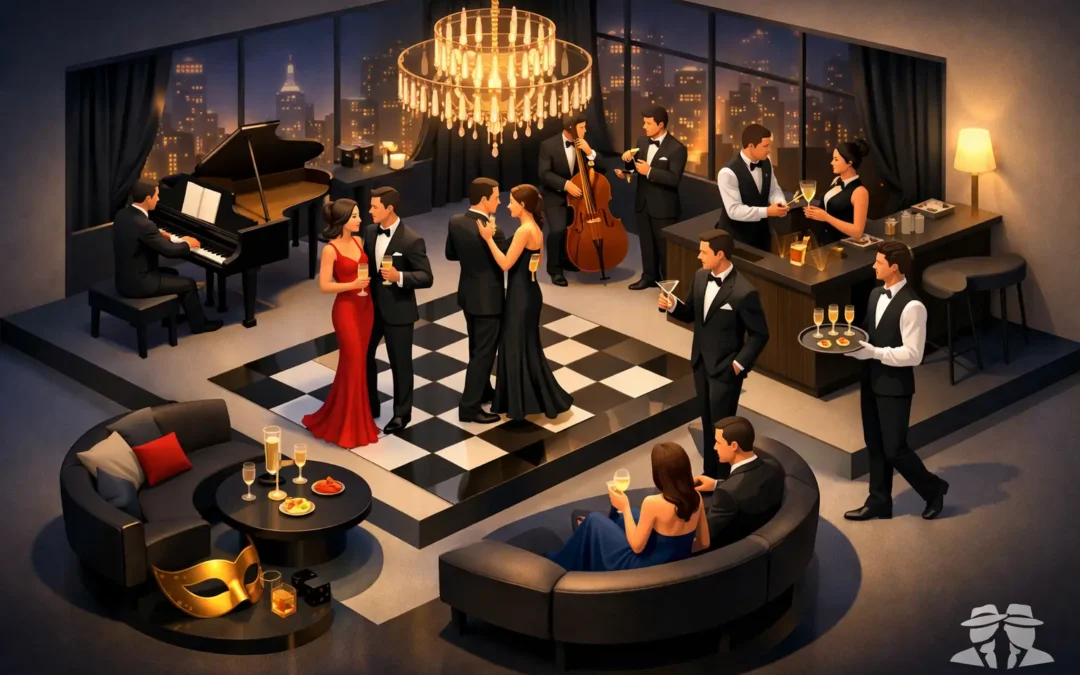
A black-tie invitation does not mean guests want to sit quietly all night. It means they expect the fun to look as polished as the room. Knowing how to entertain black tie guests is about building momentum with great timing, familiar music, and a few moments that feel special enough to earn a story the next morning.
The strongest formal events have a pulse. Guests arrive to an atmosphere, not a silent ballroom. They settle in over cocktails, connect over dinner, and eventually decide whether this is the kind of party where they loosen the bow tie, kick off the heels, and head for the dance floor. Your entertainment plan should make that progression feel natural.
How to Entertain Black Tie Guests Without Making It Stiff
The biggest mistake at a formal event is confusing elegance with restraint. A refined setting calls for confident production, tasteful presentation, and a well-read room. It does not call for a dance floor that stays empty until the final 20 minutes.
Start by matching the entertainment to each phase of the night. Cocktail hour should set a sophisticated tone without forcing conversation to compete with the music. Think polished live musicians, stylish jazz, acoustic pop, or a performer with a repertoire that feels elevated but recognizable. The goal is not background noise. It is energy at the right volume.
Dinner is where many planners accidentally lose the room. Long pauses, slow service, and no sense of movement can flatten even the most beautiful event. Build in a brief welcome, a meaningful toast, or a planned musical moment that resets attention between courses. Keep speeches focused and well-paced. A great band can also provide light walk-on music and clean transitions that make the program feel intentional rather than stop-and-start.
Then comes the release. When dinner wraps, the entertainment should make it clear that the formal part of the evening is over and the party has begun. A great opening dance-floor set does not need to be obscure or overly cool. It needs songs people know, energy they trust, and a performance strong enough to pull guests out of their seats.
Build the Night Around Energy, Not Just a Schedule
A run-of-show tells everyone where to be. An energy plan tells you how the room should feel. Both matter.
For a black-tie gala, wedding, or corporate celebration, the best pacing usually moves from anticipation to connection to celebration. Guests should not hear the biggest songs the second they walk through the door. Save those all-in, hands-up moments for when people have had a drink, finished dinner, and are ready to participate.
A live band has a major advantage here: experienced performers can read a room in real time. If the dance floor fills quickly, they can ride that wave. If an older crowd is responding to Motown, classic rock, or disco, they can stay in that lane long enough to make the moment count. If younger guests are ready for throwback pop, 90s hits, or current dance favorites, the set can shift without losing the room.
That flexibility matters because black-tie guest lists are usually mixed. You may have executives, grandparents, college friends, clients, longtime neighbors, and plus-ones sharing the same floor. One narrow genre rarely works all night. A broad, expertly sequenced setlist gives every group a reason to join in.
Start Strong, But Do Not Peak Too Early
The first dance set should be welcoming, not punishing. Open with songs that invite movement and recognition, then build toward bigger singalongs and dance classics. Give guests a reason to test the floor before you ask them to commit to it.
Later in the night, that is when you can bring out the high-impact material: the huge choruses, the throwback favorites, and the songs that turn a room full of well-dressed adults into a full-volume crowd. The best events feel like they keep getting better, not like they spent their best 15 minutes at 9:30.
Give Guests a Reason to Look Up
Formal events often have beautiful visual details, but entertainment creates the moments people remember. A surprise entrance, a first dance that turns into a full-floor invitation, a live band introducing a favorite song at exactly the right time, or a singalong finale can become the emotional high point of the night.
These moments should feel earned, not overproduced. A black-tie crowd can spot forced fun from across the ballroom. Keep participation easy. Invite, do not demand. The right song and the right performer will do more than a dozen instructions from a microphone.
Choose Entertainment That Looks the Part
Presentation counts at a black-tie event. That includes attire, stage setup, lighting, announcements, and how performers interact with guests.
Your entertainment should look comfortable in the room. A professional live act understands the difference between a shore bar crowd and a ballroom full of donors, clients, or wedding guests. The energy can still be big, but the delivery needs to be polished. Clean stage lines, appropriate formalwear, well-managed sound, and confident emceeing all reinforce the tone you worked hard to create.
Volume deserves special attention. A packed dance floor needs impact, but cocktail conversation and dinner service need breathing room. Ask your entertainment team how they handle sound levels across the night, especially in venues with low ceilings, hard surfaces, or tables close to the stage. Loud is not the same as exciting. Clear, balanced sound lets guests enjoy both the party and the people they came with.
Lighting can make an equally dramatic difference. Warm, flattering lighting works beautifully during cocktails and dinner. Once the dance floor opens, a controlled shift in color and movement signals a new chapter in the evening. You do not need a nightclub production to create excitement. You need lighting that supports the room instead of distracting from it.
Make the Dance Floor Easy to Join
People are more likely to dance when the first few songs feel familiar and the dance floor is easy to access. Avoid placing bars, photo moments, or lounge areas in a way that pulls attention completely away from the music. Guests need places to talk, of course, but the dance floor should still feel like the center of the action.
Consider the small details that reduce hesitation. Keep the dance floor open and visible. Make sure there is enough space for guests to gather without feeling trapped in a tight circle. If formal place settings or late-night furniture create a physical barrier, adjust the layout before the event starts.
Food can also help sustain the party. A late-night snack is more than a crowd-pleaser. It gives guests a quick reset and keeps the room energized for another set. The timing depends on your schedule, but serving it just as the dance floor reaches its stride can prevent the usual late-night drop-off.
Use Special Features Carefully
A black-tie crowd may love a surprise, but every feature should serve the atmosphere. Live band karaoke, music trivia, a themed mini-set, or a guest singer can be fantastic when the event is built around participation. At the wrong moment, though, they can interrupt a dance floor that is already doing exactly what you hoped it would do.
For a formal corporate function, live music trivia can work well during cocktails or as a dinner transition, especially when tables are mixed and guests need an easy way to interact. For a wedding, a short themed set can bring different generations together after the formal dances. For a gala, a featured vocalist or a big closing number may land better than a game.
It depends on the purpose of the event. If networking is the priority, give guests conversation-friendly entertainment early. If celebration is the priority, protect the dance floor once it is moving. Do not add a feature simply because it sounds fun on paper. Add it because it gives your specific crowd another reason to engage.
Give Your Entertainment Team the Right Information
The best performers can adapt, but they need the basics before they arrive. Share the guest count, age range, event purpose, venue layout, key program moments, and any songs that are must-plays or definite no-plays. Tell them whether your crowd is likely to be eager dancers, reserved professionals, or a little of both.
Also be honest about timing. If speeches tend to run long or dinner service is unpredictable, your entertainment team should know. Great event execution is not only about what happens onstage. It is about adjusting quickly when the real night does not follow the original timeline.
That is why clients across New York, New Jersey, Philadelphia, and Connecticut turn to experienced event performers like The Counterfeiters for formal events with a real party payoff. The right act brings more than a song list. It brings the judgment to know what the room needs next.
A black-tie event should leave guests impressed by the details, but it should also leave them talking about the night they had. Give them elegant surroundings, then give them a reason to celebrate inside them. When the music is right, the room is ready, and the timing is sharp, even the most formal crowd can become the best kind of dance floor.
Recent Comments