
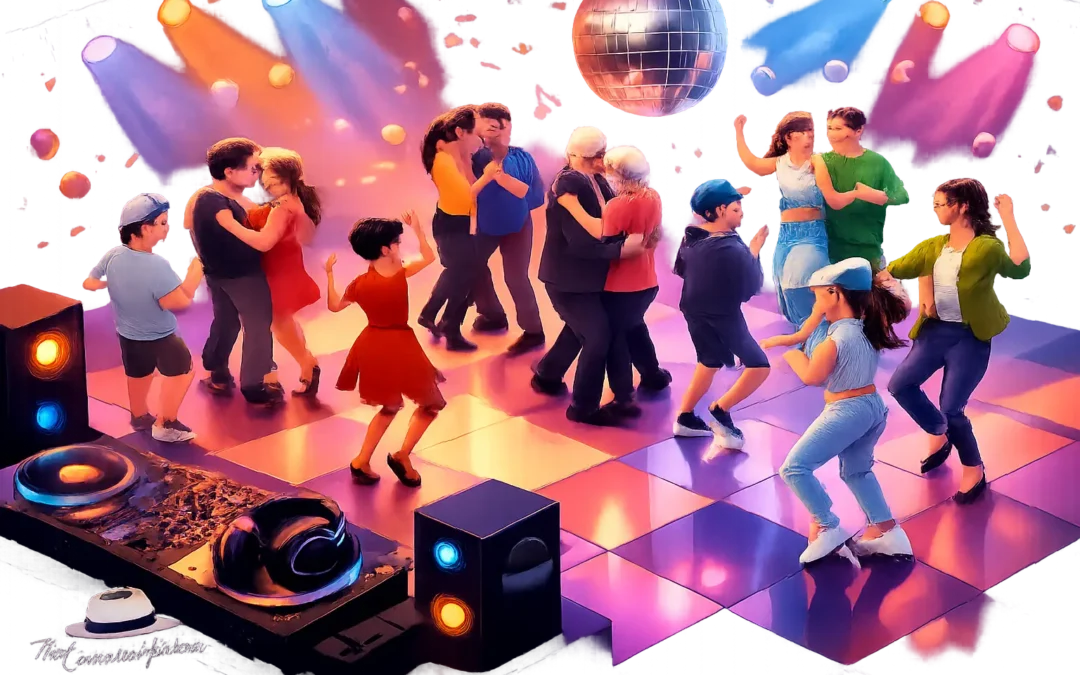
A 28-year-old cousin should not have to wait until 10:30 to hear a song they know. Your parents should not feel like the dance floor belongs to someone else by 8:00. The best event songs for mixed ages create those rare, high-energy moments when grandparents, coworkers, friends, and kids all know exactly what to do: sing the chorus and head for the floor.
That does not mean playing every hit from every decade. A great mixed-age set feels intentional. It moves from familiar to irresistible, gives guests room to talk early, and builds toward the songs that turn a good party into the event people keep talking about.
What Makes a Mixed-Age Song Work?
The strongest crowd-pleasers usually have three things in common: a recognizable opening, a chorus people can sing without thinking, and a beat that makes movement feel easy. That is why songs such as “September,” “I Wanna Dance with Somebody,” and “Mr. Brightside” can work in the same room. They come from different eras, but each one gives guests an immediate way in.
Familiarity matters more than chasing whatever is newest. At a wedding or corporate party, guests do not need a music history lesson. They want the song that makes them point at a friend, rush toward the dance floor, or shout every word with a drink in hand.
The trade-off is repetition. If every selection has the same big four-on-the-floor beat or the same nostalgic feel, the set can flatten out. The answer is not to slow the energy down. It is to change the flavor: disco into rock, pop into Motown, country crossover into a modern anthem.
Best Event Songs for Mixed Ages: The Core Set
These songs are proven choices for receptions, fundraisers, milestone birthdays, gala after-parties, and packed bar rooms. They are not meant to be played in one giant block. Spread them through the night so each wave feels fresh.
- “September” – Earth, Wind & Fire
- “Dancing Queen” – ABBA
- “Signed, Sealed, Delivered (I’m Yours)” – Stevie Wonder
- “Shout” – The Isley Brothers
- “Don’t Stop Believin’” – Journey
- “Livin’ on a Prayer” – Bon Jovi
- “You Shook Me All Night Long” – AC/DC
- “I Wanna Dance with Somebody” – Whitney Houston
- “Billie Jean” – Michael Jackson
- “Man! I Feel Like a Woman!” – Shania Twain
- “Yeah!” – Usher
- “Since U Been Gone” – Kelly Clarkson
- “Cupid Shuffle” – Cupid
- “Uptown Funk” – Mark Ronson featuring Bruno Mars
- “Shut Up and Dance” – WALK THE MOON
- “Can’t Stop the Feeling!” – Justin Timberlake
- “Flowers” – Miley Cyrus
- “Levitating” – Dua Lipa
- “Mr. Brightside” – The Killers
- “Shake It Off” – Taylor Swift
A list is only a starting point. The order, the performance style, and the crowd in front of you determine whether a song lands. A live band can read the room, extend a chorus when the room is roaring, or pivot before a slower selection drains the floor. That flexibility is where a planned playlist and a real show start to feel very different.
Build the Night in Waves, Not Decades
A common mistake is programming the evening like a timeline: 1960s songs first, then 1970s, then 1980s, and so on. It sounds organized on paper, but it can split the room into age groups. Guests who love one section may sit out the next.
Instead, connect generations through energy and recognition. Pair “Dancing Queen” with “I Wanna Dance with Somebody.” Follow “Livin’ on a Prayer” with “Mr. Brightside.” Use “September” to launch a groove section, then bring in “Uptown Funk” while everyone is already moving. The decades change, but the momentum stays intact.
This approach also makes room for guests with different tastes. The person who came for classic rock may not request a current pop song, but they will stay on the floor if the transition makes sense. The guest who lives for 2000s throwbacks will happily sing along to a Motown classic when the band has already earned their attention.
Start with invitations, not demands
Early in the event, favor songs that are warm, recognizable, and easy to enter. “Signed, Sealed, Delivered (I’m Yours),” “Valerie,” “Brown Eyed Girl,” or “This Will Be (An Everlasting Love)” can bring people together without making the room feel like it has skipped straight to midnight.
For weddings, this is often the right place for a few family-friendly favorites and songs that work for guests who are happy dancing beside their table rather than in the center of the floor. At a corporate event, it is also smart to leave space for conversation before turning up the intensity.
Hit the dance-floor engine at the right time
Once the room is ready, stack recognizable songs with minimal downtime. A packed dance floor likes confidence. Avoid long speeches between every song, overly niche selections, or a run of slow tracks that sends guests back to their seats.
This is where the big singalongs earn their place. “Don’t Stop Believin’,” “Shout,” “Yeah!,” “Shake It Off,” and “Sweet Caroline” are not subtle choices. They are participation songs. Used at the right moment, they create the loudest photos, the biggest videos, and the stories people repeat the next morning.
Do Not Forget the Guests Who Do Not Dance First
Mixed-age events are won before everyone reaches the floor. Cocktail hour, dinner, and transitions matter because they set the tone without asking too much of guests too soon.
For these moments, choose music with personality but less pressure. Soul, light rock, acoustic pop, and polished classics work beautifully. Think “Lovely Day,” “L-O-V-E,” “Dreams,” “Put Your Records On,” or a well-chosen modern pop arrangement. The goal is atmosphere, not silence and not a full-volume concert while guests are trying to catch up.
Then use recognizable cues to pull people in. A short intro, a strong bass line, or a chorus everyone knows can change the room in seconds. Guests rarely announce that they are ready to dance. They show it when the right song arrives.
Requests Need Guardrails
Client requests matter. They make a celebration personal and can create unforgettable moments. A couple may have a first-date song, a birthday guest may have one non-negotiable favorite, or a company may want a signature closing anthem.
But an unrestricted request list can work against the room. Ten slow songs, five obscure tracks, or a string of one-person favorites can interrupt the flow you hired entertainment to create. The best plan separates must-plays from nice-to-haves and gives the band room to make smart calls in real time.
A useful rule is to identify a handful of personal songs, a short do-not-play list, and any cultural or family traditions that deserve a spotlight. Then let the performers build the road between those moments. That is how the event feels personal without becoming disjointed.
Match the Music to the Event, Not Just the Guest List
The best song mix depends on why people are gathering. A black-tie fundraiser may need a polished cocktail set before the big dance hits. A shore-bar crowd may want 80s rock, 90s pop, and rowdy singalongs earlier in the night. A wedding needs room for milestones, from the first dance to the final all-hands-on-deck closer.
For corporate groups, keep the early selections broadly welcoming and save the more playful, lyric-heavy songs for later, once the room relaxes. For family celebrations, build in songs that let children, parents, and grandparents share a floor without anyone feeling out of place.
That is why format flexibility matters. The Counterfeiters approach a party as a live experience, not a fixed set of songs. A great band brings the hits, but it also brings the judgment to know when to change gears.
The right closing song is not always the same title. Sometimes it is “Piano Man” with every guest shoulder to shoulder. Sometimes it is “Shout” at full volume. Sometimes it is a personal anthem that belongs only to your group. Choose music that gives every generation a reason to stay for one more song, then give them a finish worth remembering.
Recent Comments