
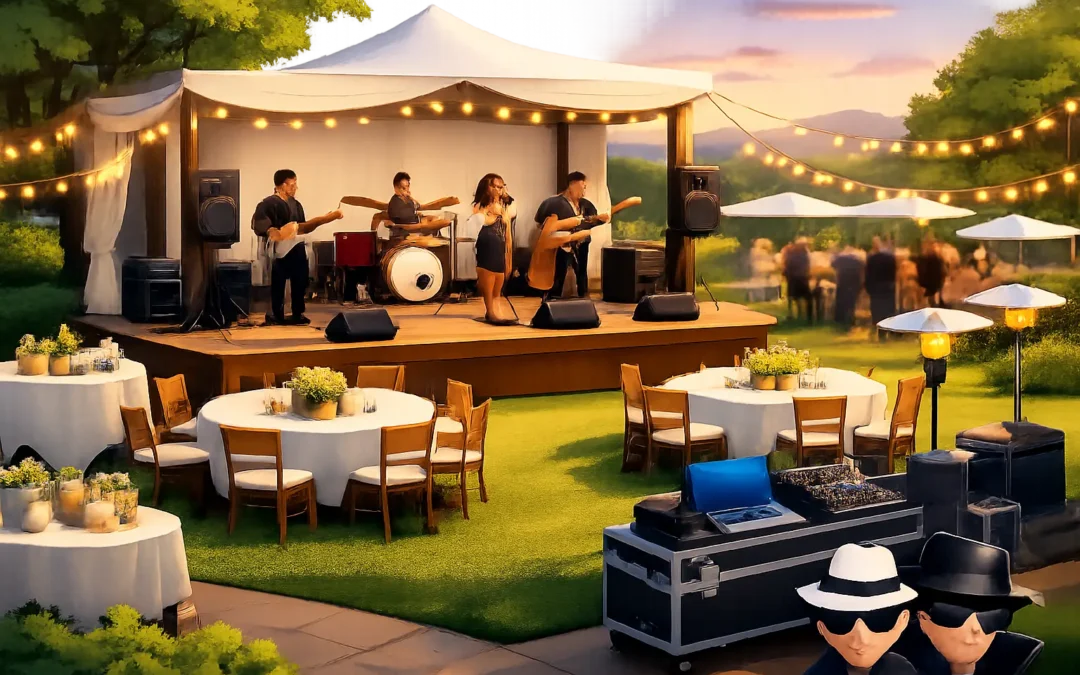
A great band setup for outdoor receptions should feel effortless to guests. They should hear the music clearly, find the dance floor naturally, and stay focused on the celebration – not on extension cords, speaker stands, or whether the band is about to get hit by a rain shower.
That kind of effortless party takes real planning. Outdoor receptions bring a different set of variables than a ballroom: uneven ground, changing temperatures, neighborhood noise limits, limited power, wind, bugs, and weather that can change the whole plan in ten minutes. Get the setup right, though, and an outdoor reception can produce the kind of energy indoor events chase all night.
Start With the Dance Floor, Not the Stage
The most common outdoor layout mistake is treating the band like background scenery. If the goal is a packed dance floor, the band, dance floor, and guest seating need to work as one entertainment zone.
Place the stage or performance area facing the dance floor, with tables close enough for seated guests to feel connected to the action. A band pushed to the far edge of a lawn may look fine on a site map, but it can split the party in two. Guests settle at their tables, the dance floor feels isolated, and the energy has to travel too far.
The ideal distance depends on the property and guest count, but the performance area should have a clear visual line to the dance floor and the main seating area. Guests need to see the singers, recognize the big moments, and feel invited in. Live music works best when it feels like something is happening right in the middle of the party.
Keep the bar nearby, too. Not directly beside the speakers, but close enough that guests can grab a drink and return to the action without disappearing to another part of the property. A reception layout should create momentum, not little islands of activity.
Build a Real Stage Area
Grass is not a stage. Even a beautiful lawn can become soft after rain, uneven under heavy equipment, or difficult for performers in dress shoes. A stable, covered stage gives the band a safe place to perform and helps the entire event look more polished.
For most full party bands, a stage around 16 by 20 feet is a strong starting point. Larger lineups, horn sections, multiple vocalists, or a production-heavy show may need more room. The right answer depends on the band’s lineup and equipment, so confirm dimensions before rentals are finalized.
A proper stage should be level, sturdy, and fully covered. The cover matters for more than rain. It protects instruments and electronics from direct sun, helps performers stay comfortable, and keeps a sudden drizzle from ending the show early. Sidewalls can be useful in wind or light rain, but they need to be planned carefully so they do not trap heat or block sightlines.
If a stage is not possible, a flat tented surface can work for a smaller act. What does not work well is asking musicians to set up on loose gravel, a sloped patio, wet grass, or a space with no protection from the elements.
Give the Band Room to Load In
A band setup is more than the footprint guests see. Musicians need a practical route from vehicles to the stage, especially when carrying speakers, drum hardware, keyboards, guitars, lighting, and production cases.
Before event day, confirm where vehicles can park, whether there are stairs or narrow gates, and how far the load-in path runs. A long walk across a property is manageable when everyone knows about it in advance. A surprise staircase or locked gate can throw the timeline off fast.
Leave room near the stage for equipment cases and a small backstage area. It does not need to be glamorous. It does need to be dry, secure, and out of guest traffic.
Power Is the Part Nobody Notices – Until It Fails
Reliable power is the backbone of an outdoor reception. Household outlets are often not enough for a full live band, especially when catering, lighting, photo booths, heaters, and other vendors are also pulling from the same electrical system.
The safest approach is dedicated power for the band, ideally from a properly rated generator or separate circuits confirmed by the venue or an electrician. The band should not share power with catering equipment, refrigeration, tent lighting, or anything that cycles on and off. A sudden power draw can cause audio problems, tripped breakers, or an abrupt silence right when the dance floor is rolling.
Ask the entertainment team what power they require early in the planning process. This is not a detail to handle the week of the wedding or corporate event. It affects generator sizing, cable runs, staging, and where the band can perform.
All cables should be secured and covered where guests or staff may cross them. Outdoor events have enough trip hazards already. Professional cable management keeps the space clean, safe, and camera-ready.
Plan for Weather Before There Is Weather
A weather plan is not pessimistic. It is what allows everyone to relax when the forecast gets interesting.
The best backup plan identifies exactly where the band will move if rain arrives, who makes that call, and how much time the move requires. A tented backup location is often the simplest choice, provided the space is large enough, has proper flooring, and can handle the band’s electrical needs.
Do not assume a tent automatically protects a live band. A tent with open sides can still take on blowing rain, and damp conditions are risky for electrical equipment. If rain is possible, the performance area needs a dry, covered solution that keeps equipment off wet ground.
Heat matters, too. Summer outdoor receptions in New York, New Jersey, Connecticut, and the Philadelphia area can get humid fast. Shade, airflow, drinking water, and reasonable access to a break area help the performers bring full energy from the first song through the final encore. A band playing in direct sun at 4 p.m. is working under very different conditions than a band taking the stage after sunset.
Make Outdoor Sound Feel Big, Not Harsh
Open air changes how music travels. There are no walls to contain the sound, so an outdoor band may need a thoughtful speaker setup to create impact on the dance floor without blasting guests at dinner tables or upsetting neighbors.
That starts with placement. Speakers should aim toward the dance floor and away from nearby homes whenever possible. The goal is focused sound where people are partying, not volume spilling across the property. A professional band can adjust throughout the night, but smart placement makes those adjustments far easier.
Noise ordinances and venue curfews should be confirmed before booking entertainment. Some locations allow amplified music until a specific hour, while others have strict decibel limits or restrictions on subwoofers. These rules do not mean the party has to lose its edge. They simply shape the production plan, set timing, and sometimes the choice between a full outdoor finale and a later indoor after-party.
Also consider the reception timeline. Acoustic music, a solo performer, or a playlist may be the better fit for cocktail hour if the band’s full setup will not be ready yet. Then, when the dance set begins, the room – or lawn – gets the full impact it deserves.
Coordinate Every Vendor Around the Show
The band cannot create a great party in a vacuum. Caterers need clear service paths. Photographers need access to key moments. Planners need room for speeches, first dances, cake cutting, and surprises. Rental teams need to know where the stage, tent, and generator go before trucks arrive.
Share the event timeline and site plan with the entertainment team early. Let them know when guests arrive, when dinner begins, where speeches happen, and whether there are special songs or format changes planned. That allows the band to build momentum instead of reacting to last-minute changes.
If the reception includes a tent, make sure the stage location does not block entrances, bars, or emergency exits. If it is an open-lawn party, account for sunset and lighting. Once the sky gets dark, guests need a safe route to the dance floor, and the band needs enough stage lighting to put on a real show.
The Counterfeiters have seen the difference a smart layout makes: when the stage, power, weather plan, and dance floor are ready, the music can do what it is supposed to do – turn a beautiful outdoor gathering into a full-on celebration.
A polished outdoor reception is not about controlling every variable. It is about planning the essentials well enough that when the first big chorus hits, nobody is thinking about logistics. They are already on the dance floor.
Recent Comments