
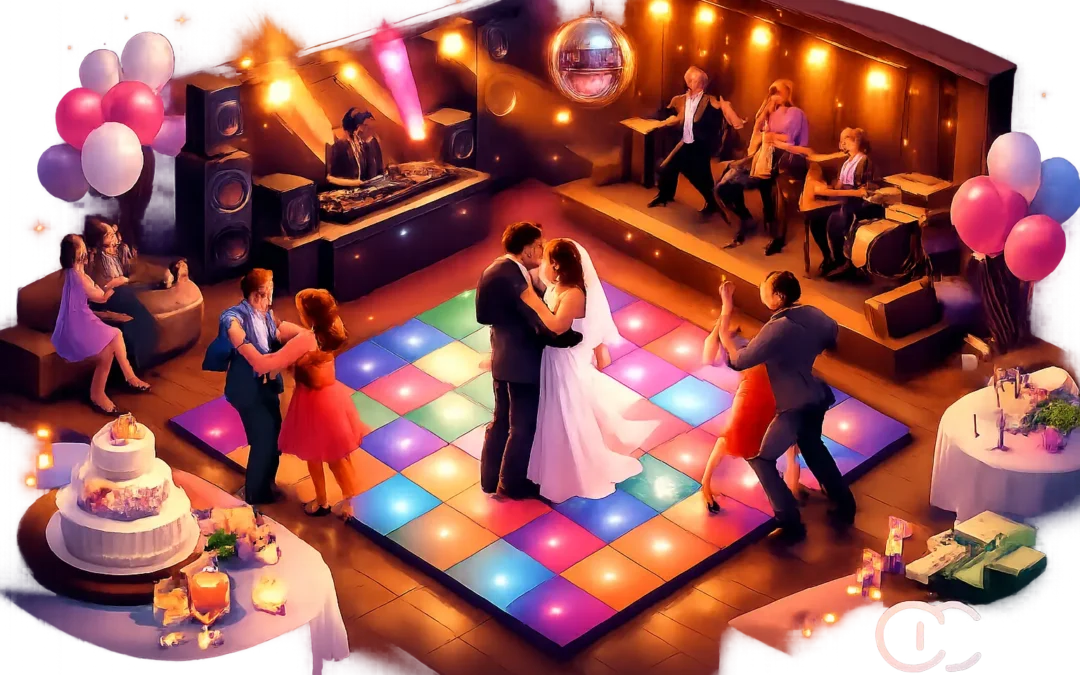
A wedding dance floor tells the truth fast. If the room feels split between generations, if the transitions drag, or if the music only works for one corner of the guest list, everyone notices. Great dance floor wedding entertainment fixes that. It creates momentum, reads the room, and keeps the night feeling full instead of forcing people to participate.
That matters because most couples are not just booking music. They are trying to solve a bigger problem: how to get college friends, parents, coworkers, and extended family into the same party without making the celebration feel generic. The best entertainment choice is the one that turns a nice reception into a packed one.
What dance floor wedding entertainment actually needs to do
A lot of wedding planning conversations start with genre. Pop or Motown. Classic rock or 90s. DJ or band. Those questions matter, but they are not the real test. The real test is whether your entertainment can build a night with shape.
A full dance floor usually comes from three things working together: recognizable songs, smart pacing, and confident crowd reading. If one of those is missing, the night can still be pleasant, but it rarely turns electric. You might get a good first set and then a drop-off. You might get polite dancing from one age group while everyone else stays at the bar. Or you might get strong songs delivered with no sense of timing.
That is why experienced wedding entertainment feels different from simply hiring talented musicians. Talent matters, of course. But weddings reward instinct just as much. The room changes every 15 minutes. Dinner runs late. A toast lands big. The couple wants more 80s than expected. The flower girl is suddenly owning the floor at 8:30. A strong entertainment team can adapt without making the adjustments obvious.
Live band, DJ, or a hybrid setup?
This is where it depends on the couple, the guest mix, and the kind of energy you want in the room.
A DJ can offer range, speed, and nonstop playback. That works especially well for couples who want club-style flow, lots of original recordings, or a format that can pivot hard between decades and genres. A strong DJ can absolutely keep a floor moving.
A live band brings a different kind of lift. There is more visual energy, more personality, and more connection between performers and guests. A great party band does not just play songs people know. It turns those songs into moments. The chorus hits harder. The room reacts faster. The energy onstage gives people permission to let go.
For many weddings, the best answer is not band versus DJ in some abstract sense. It is whether the entertainment team can cover the full arc of the night. That may mean live music for the high-impact dance sets and curated recorded music for breaks or late-night transitions. Couples who want a packed floor often care less about labels and more about whether the night ever loses steam.
The best dance floor wedding entertainment is built for mixed-age crowds
This is where weddings are different from bar gigs and private parties with a narrow age range. You are not programming for one lane. You are programming for guests in their late 20s, 30s, 40s, 50s, 60s, and beyond, all in the same room.
That does not mean every song has to appeal to every person. It means the night has to keep rotating the spotlight without breaking the momentum. A set that moves from singalong 80s to 2000s pop to Motown to current party hits can work beautifully if the transitions make sense. A set that jumps randomly, even with great songs, can feel scattered.
The strongest wedding entertainers know how to thread that needle. They do not chase cool points at the expense of the crowd. They also do not flatten the setlist into safe background music. They know when to go broad, when to go big, and when to surprise the room.
That balance is a major reason some weddings feel full from the first dance set forward, while others need constant coaxing.
Song selection matters, but pacing matters more
Couples naturally spend time building a must-play list. That is worth doing, but pacing is what determines whether those songs land.
If the first dance set starts too niche, guests hesitate. If the night peaks too early, the room gets tired by the time the party should be hottest. If slow songs show up at the wrong moment, they can empty the floor. If there is too much talking between songs, the energy leaks out.
The entertainment should be thinking like a show, not a playlist. Start with songs that pull people in quickly. Build confidence in the room. Create early wins. Then expand. Once the floor is established, you have more freedom to lean into the couple’s personality, favorite decades, or a few left-field picks.
This is where veteran wedding bands separate themselves. They understand that getting people onto the dance floor is one job. Keeping them there is another.
What to ask before you book
If you are comparing entertainment options, ask questions that reveal how they actually run a wedding, not just how they sound in a promo clip.
Ask how they handle mixed-age crowds. Ask how they build a setlist in real time. Ask whether they adjust based on the room or stick to a preplanned show. Ask who handles emcee duties and whether that style is polished or overly cheesy. Ask how they coordinate with planners, venues, and photographers to keep the reception moving.
These details do not sound flashy, but they have a huge effect on the dance floor. Professional execution keeps the night flowing. Awkward pauses, late starts, and clunky announcements hurt momentum faster than people realize.
You should also ask about flexibility. Some couples want a classic wedding feel. Others want a dance-heavy party with almost no interruption. Some want a black-tie energy early and a looser, louder feel later. The best entertainment providers can shape the night around that instead of forcing every event into the same format.
Common mistakes that thin out a wedding dance floor
One of the biggest mistakes is booking based on personal taste alone. Your favorite deep cuts may be great songs, but weddings need broad traction. Another is assuming volume equals energy. Loud music without direction does not fill a floor. It just fills a room.
A third mistake is underestimating the value of stage presence. Guests respond to confidence. They want to feel like the entertainment is leading the party, not waiting for the party to happen on its own.
Then there is the issue of over-customizing. Yes, your wedding should feel personal. But if every choice is built around your exact music history as a couple, the guest experience can get narrow. The sweet spot is a reception that feels like you while still giving the room what it needs to celebrate with you.
Why experience wins at weddings
Wedding entertainment is live performance, but it is also event management in real time. The best teams know how to work with timing shifts, venue constraints, formalities, and guest energy without making any of it look difficult.
That is especially true in busy wedding markets like New York, New Jersey, Philadelphia, and Connecticut, where timelines can be tight and expectations can run high. A polished band or entertainment team is not just there to sound good. They are there to keep the night moving, maintain the mood, and help the reception feel effortless.
That is why couples and planners often come back to proven party bands with a wide range and serious reps behind them. A group like The Counterfeiters is built around exactly that challenge – broad appeal, strong pacing, and the kind of crowd connection that keeps the floor packed instead of patchy.
The right choice should feel exciting and dependable
You should feel a little adrenaline when you picture your wedding entertainment. That is part of the point. But excitement alone is not enough. The right fit also feels dependable, organized, and ready for the realities of a live event.
When the entertainment is right, guests stop thinking about what comes next. They stay in it. They sing louder, stay longer, and remember the reception as a real party rather than just the part after dinner.
If you want a wedding dance floor that feels full, the goal is not simply hiring people who can play. It is choosing a team that knows how to create motion in the room, adjust without missing a beat, and make your crowd feel like they are part of something big. That is the kind of night people talk about on the ride home.
Recent Comments