
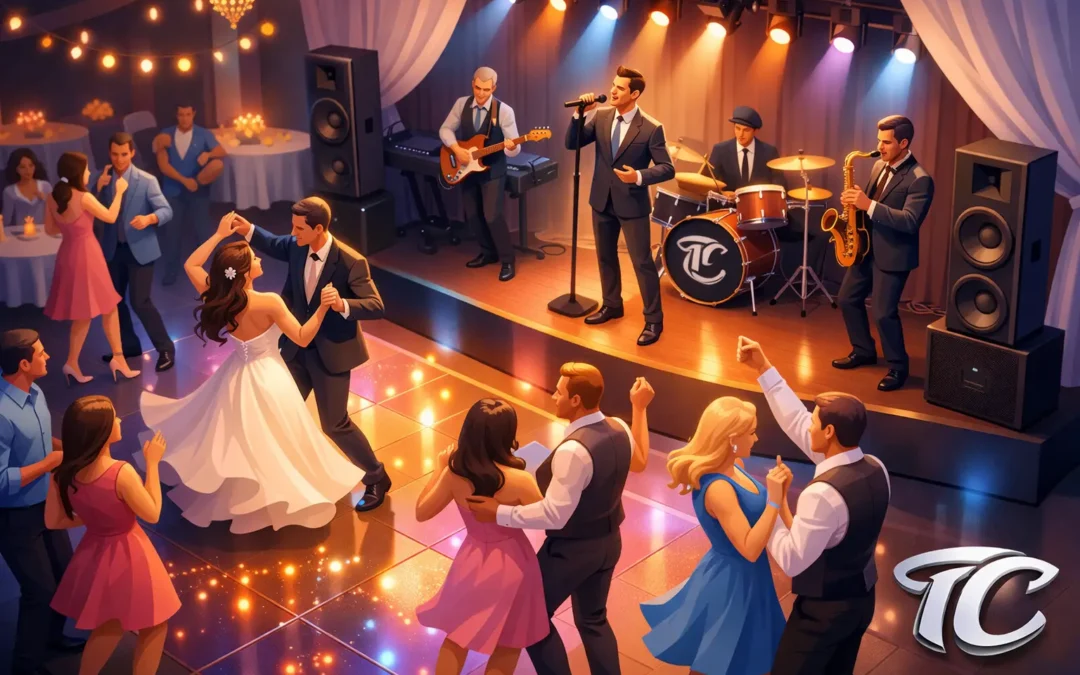
The biggest shift in weddings is not a single song, a viral dance, or a new kind of instrument. It is the expectation that the reception should feel like a real party. Couples want the room buzzing before dinner is cleared, grandparents singing along beside college friends, and a dance floor that stays busy until the venue turns up the lights. That is what is driving the most exciting live wedding music trends right now.
For couples planning across New York, New Jersey, Philadelphia, and Connecticut, the best entertainment choices are less about chasing whatever is popular online and more about building momentum for a mixed crowd. The right live band does not simply play a playlist. It reads the room, moves the night forward, and gives guests moments they will talk about long after the last song.
Live Wedding Music Trends Are Getting More Personal
The old model was straightforward: a little background music during cocktails, a formal first dance, then a band playing a broad mix of standards. That can still work beautifully. But couples are now putting more personality into every part of the musical timeline.
A string duo might play a modern pop song for the ceremony. Cocktail hour may feature an acoustic set with soul, yacht rock, or tasteful 90s favorites. Then the reception opens with a full band that hits hard from the first big entrance. The point is not to make every minute feel different just for the sake of it. It is to make the entire night feel intentional.
The strongest trend is customization with a purpose. A couple who met at an 80s-themed bar may want a few big throwback moments. A family with deep roots in R&B, Latin music, country, or classic rock may want those sounds represented in ways that get everyone involved. Great wedding entertainment builds those details into a set without turning the reception into a collection of disconnected requests.
The Return of Big, Familiar Songs
Guests still want songs they know. In fact, the appetite for recognizable hits is stronger than ever. A wedding crowd is usually made up of several generations, friend groups, coworkers, and relatives who may be meeting for the first time. Familiar music gives everyone common ground fast.
That does not mean every reception needs the same predictable setlist. It means a skilled live band knows how to connect eras and genres. One well-timed 90s singalong can bring the room together. A classic rock anthem can work right after a current pop hit when the energy is right. The best sets make those transitions feel natural instead of random.
Nostalgia is especially powerful because it is emotional without being too formal. People hear the opening of a song they loved in high school or during college and suddenly they are on the floor. That kind of instant reaction is hard to replace.
A Packed Dance Floor Matters More Than a Perfect Playlist
Couples are paying closer attention to the guest experience, and that has put dance-floor energy at the center of wedding planning. A long list of must-play songs does not guarantee a great party. In some cases, it can make the night feel rigid.
The better approach is to give your band a clear sense of your taste, your no-play list, and the moments that matter most. Then trust experienced performers to make decisions in real time. If the dance floor is full of guests responding to disco and funk, it may not be the moment to force a slow country tune because it appeared on a spreadsheet. If a certain age group is finally making its way to the floor, the band should know how to keep them there.
Live musicians can adjust tempo, extend a chorus, call out a birthday, or pivot to a song that fits the room. That flexibility is a major reason live bands remain a top choice for couples who want celebration, not just sound.
Shorter Songs, Faster Momentum
Another one of the live wedding music trends worth watching is tighter pacing. Guests love big songs, but they do not necessarily need every song performed from beginning to end. A sharp medley, a quick transition, or a mashup of crowd favorites can keep momentum high and fit more recognizable moments into the night.
This works especially well late in the reception, when guests want hit after hit. A band can move from a rock chorus into a dance-pop hook, land on a throwback everyone knows, and keep the floor moving without a lull. It feels more like a great night out than a formal concert.
There is a trade-off, of course. Couples with a deeply meaningful full-length first-dance song or a favorite anthem may want space for it to breathe. The answer is not to speed through everything. It is to use pacing strategically, saving longer performances for the moments that deserve them.
The Reception Is Becoming a Full Show
More couples are treating the band as the engine of the entire celebration, not an act that appears after dinner. That can include a high-impact grand entrance, an energetic first set before the meal, coordinated announcements, and a final stretch designed to leave the room on a high.
This is where professional event execution matters. A wedding band needs to be entertaining, but it also needs to work with the planner, caterer, photographer, venue team, and couple. When dinner runs long or the speeches become emotional, the music plan may need to shift. The right band keeps the night moving without making the change feel like a problem.
Interactive touches are growing, too. Some couples want a band-led singalong, a guest vocalist moment, or live band karaoke during an after-party. These formats can be a blast when the crowd is outgoing and the event calls for something unexpected. They are not required at every wedding. A black-tie room with a short reception may be better served by a polished, focused dance set than an open-mic-style feature.
Multiple Music Moments Beat One Long Block
A great wedding has natural energy changes. Ceremony music should set the mood. Cocktail hour should invite conversation. Dinner music should support the room rather than compete with it. Then the reception needs a clear lift.
Couples are increasingly booking music with those transitions in mind. Instead of thinking, “What band do we want?” they are asking, “How do we want the whole night to feel?” That can lead to a smaller format early and a full party band later, or one versatile group that can shift its sound and volume throughout the celebration.
This approach is especially useful for venues with sound considerations, outdoor ceremonies, and destination-style weekends. It creates variety without asking guests to adapt to a completely different entertainment experience every hour.
The After-Party Is Still Going Strong
The wedding after-party is not new, but it is becoming more planned and more musical. Some couples move to a hotel bar, a private lounge, or a smaller venue space where the dress code relaxes and the playlist gets a little bolder.
A DJ can be a great fit for this portion of the night, particularly when the crowd wants late-night club energy. But a compact live format can also keep the celebration feeling personal and connected. Think live band karaoke, a decades set, or a stripped-down group playing songs that turn strangers into backup singers.
The practical question is timing. If the main reception ends late, an after-party may pull energy away from the dance floor instead of adding to it. If your venue has an early cutoff or your guests are ready to keep going, it can become the perfect second act.
Choose the Trend That Fits Your Crowd
The best wedding music trend is the one your guests will actually enjoy. A packed dance floor does not come from copying another couple’s reception. It comes from knowing your crowd, choosing performers with range, and creating enough room for the night to develop naturally.
Bring your favorite songs, your biggest no-thanks picks, and the kind of party you want to remember. Then choose live entertainment that can turn that vision into a room full of singing, dancing, and one more song before the lights come up.
Recent Comments