
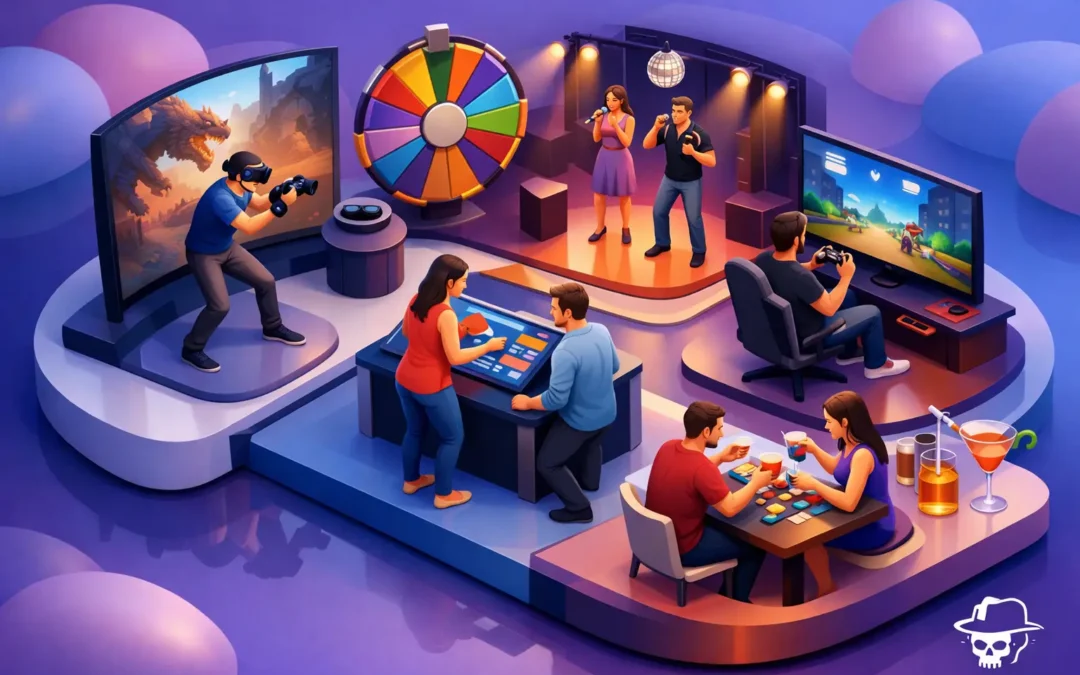
A packed room can go flat faster than most hosts expect. The playlist is decent, the lighting looks good, the bar is open – and yet people stay in their seats, glance at their phones, and wait for something to pull them in. That is exactly where interactive entertainment for adults earns its keep. The right format does more than fill time. It gets people involved, raises the energy, and turns a nice event into one people actually talk about afterward.
For adult crowds, that difference matters. You are usually not trying to entertain one narrow age group with one taste level. You are trying to win over coworkers, wedding guests, regulars at a venue, or a mixed crowd of friends who all want to have fun but may not jump in the same way. That means the best entertainment is not just impressive to watch. It is easy to join, easy to enjoy, and strong enough to carry the room.
What adult audiences actually respond to
Adults do not need constant gimmicks. They need a reason to participate without feeling put on the spot. That is the sweet spot. If the entertainment asks too much too fast, people resist. If it stays too passive, the room never fully wakes up.
That is why recognizable music, shared nostalgia, light competition, and low-pressure participation work so well. A room full of adults might not all want to sing solo, but they will absolutely sing a chorus together. They may not want a forced icebreaker, but they will jump into a music trivia round when the right song hits. They may not think of themselves as dancers, yet suddenly the floor fills when the band locks into a run of favorites everyone knows.
The best interactive formats create permission. They tell the crowd, without saying it outright, that this is not a sit-back-and-watch kind of night.
The strongest types of interactive entertainment for adults
Some formats look great on paper but stall in real rooms. Others keep delivering because they match how adults socialize. The difference usually comes down to familiarity, pacing, and whether the entertainment can adapt on the fly.
Live band karaoke
This is one of the clearest examples of interactive entertainment for adults done right. People already know karaoke works. Put a live band behind it, and the entire experience levels up. Suddenly it feels less like a side activity and more like a featured moment.
The appeal is obvious. Guests get their moment, the crowd gets a show, and the event keeps its momentum. It works especially well at corporate events, milestone birthdays, and private parties where guests want something more memorable than a standard playlist.
There is a trade-off, though. Live band karaoke only works if the backing musicians are tight, flexible, and fast at managing the room. The song list matters, but the pacing matters more. Long gaps kill energy. The best version feels polished and loose at the same time.
Live music trivia
Trivia is a smart choice when you want interaction without forcing everyone onto a dance floor. Add live music, and it becomes much more dynamic than a standard pub quiz. A great host or band can turn a simple question round into a full-room experience by dropping hooks, teasing answers through song clips, or building rounds around decades and genres that trigger instant reactions.
This format shines for corporate groups, bars, fundraisers, and events where conversation matters as much as dancing. It gives people a reason to engage with each other, not just with the stage.
It also has limits. Trivia is not always the right closer for a black-tie dance crowd that wants nonstop movement. It is often strongest as an early-to-mid event feature that gets everyone warmed up before the full party mode kicks in.
Theme nights and decade shows
If you want adults to participate quickly, give them a theme they already understand. 80s nights, 90s parties, yacht rock sets, disco throwbacks, and decade-spanning shows work because they come with built-in emotional connection. Guests know the songs, know the vibe, and usually know how they want to show up.
This makes themed entertainment especially effective in mixed-age rooms. One group connects through nostalgia, another through novelty, and everyone meets in the middle on songs that still hit. That is a big deal for weddings and public venues where broad appeal is everything.
The caution here is simple. A theme should be strong enough to create identity, but not so narrow that it boxes out half the crowd. The best bands know how to commit to the concept while still keeping the set flexible.
Dance-driven live bands
Sometimes the most interactive choice is also the most straightforward. A live party band with the right setlist, pacing, and crowd awareness can outperform trendier entertainment because it solves the core problem: getting people out of their seats and keeping them there.
This is especially true when the band knows how to read age range, energy level, and event flow in real time. Adult audiences do not want to be lectured into having fun. They want a band that senses when to hit the singalong, when to stretch the dance block, and when to shift gears so the night never drags.
That is why live music remains one of the safest bets for events where stakes are high. Weddings, galas, and major corporate parties do not need entertainment that is merely interesting. They need entertainment that lands.
How to choose the right format for your event
The smartest question is not, “What sounds exciting?” It is, “What will this crowd actually do?” Those are not always the same thing.
For a wedding, the best interactive entertainment usually supports the dance floor and gives guests a few shared moments they can jump into easily. A high-energy band, a surprise live band karaoke feature, or a themed late-night set can all work. The deciding factor is often guest mix. If your crowd spans generations, broad-recognition songs and easy participation beat niche concepts every time.
For corporate events, engagement matters in a different way. You need something fun without making people uncomfortable. Music trivia, curated theme sets, and audience-friendly live performances usually hit the mark because they invite participation without forcing it. If the goal is team energy, interactive beats passive every day of the week.
For bars, clubs, and public venues, repeat value matters. You want entertainment that pulls people in, keeps them there longer, and gives them a reason to come back next month. This is where rotating formats are powerful. A venue can run a party-band night one weekend, live music trivia the next, and a themed throwback event after that without losing consistency.
What separates great interactive entertainment from awkward entertainment
Execution. That is the whole game.
A lot of event ideas sound fun in theory. Very few survive contact with a real crowd unless the performers know how to lead the room. Adult audiences can tell immediately when something feels forced, under-rehearsed, or overly scripted. They can also tell when the entertainment team knows exactly how to keep things moving.
That means strong transitions, clear hosting, no dead air, and enough musical range to adjust on the spot. It also means knowing when not to push. Not every crowd is ready to go full-throttle at 7:15. Sometimes the room needs a gradual build. Sometimes it needs one huge opening number. Sometimes it needs one confident emcee moment that gives everyone permission to loosen up.
The point is not to manufacture energy. It is to create the conditions where energy happens naturally.
Why live formats keep winning
There is a reason live entertainment continues to dominate adult events when the goal is real atmosphere. It responds. A playlist cannot read the room. A generic activity cannot pivot when the crowd skews older, louder, or more reserved than expected. A skilled live act can.
That flexibility matters a lot in the kinds of events most adults attend. Weddings run ahead or behind. Corporate crowds can start guarded and end rowdy. Public venues live and die on audience mood. In all of those situations, interactive entertainment works best when the performers can shift format, tempo, and tone without losing control of the night.
That is where experienced entertainment teams separate themselves. They are not just playing songs or running an activity. They are managing momentum.
The real goal is not participation for its own sake
Nobody books entertainment just to say the crowd interacted. They book it because they want the room to feel alive. That is the real standard. If guests are laughing, singing, dancing, competing, and pulling each other into the moment, the event feels bigger, warmer, and more memorable.
That is why the strongest interactive entertainment for adults usually starts with one simple question: what will get this particular crowd to lean in? Sometimes the answer is live band karaoke. Sometimes it is music trivia. Sometimes it is a killer dance set with zero filler. If the format fits the room and the performers know how to drive it, that is when the night takes off.
And once that happens, nobody is checking their phone anymore.
Recent Comments