
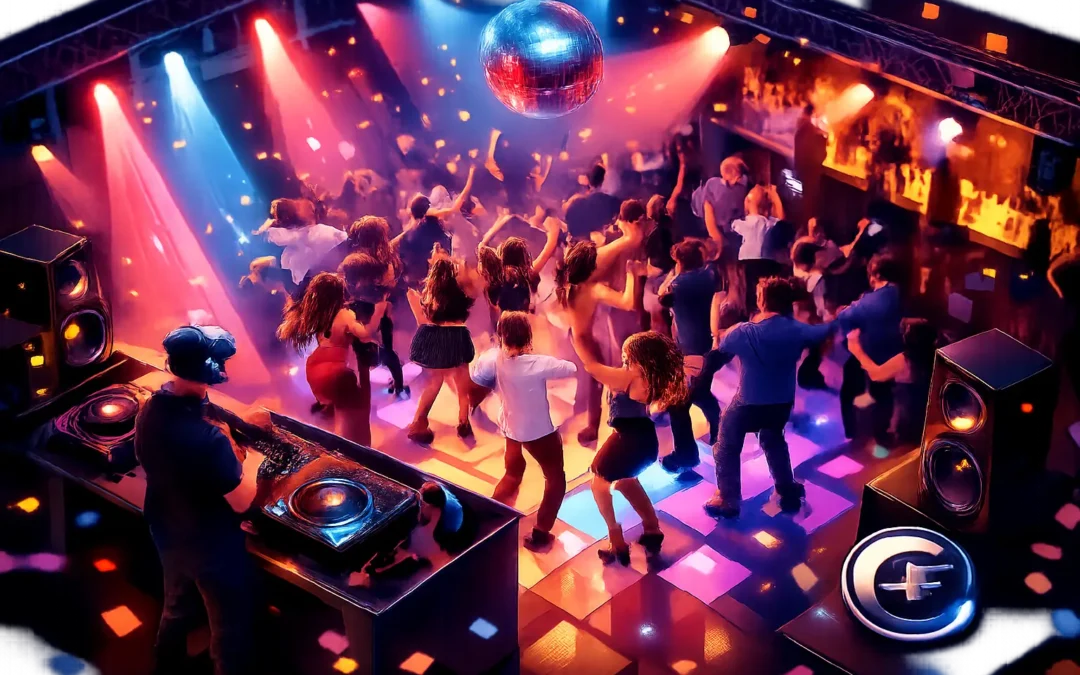
You can feel it when a room is about to tip in the right direction. The bar is full, people are talking, dinner just wrapped, and everyone is waiting for a reason to get up. Packed dance floor event music is that reason. It is not just a stack of popular songs. It is the right song at the right moment, played with the right energy, by entertainers who know how to read a room instead of forcing one.
That matters because most events do not fail on decor, lighting, or menu. They flatten out when the entertainment misses the crowd. A dance floor does not stay full because the playlist looked good on paper. It stays full because the music feels familiar, timely, and impossible to ignore for guests in their 30s, 40s, 50s, and beyond.
What packed dance floor event music really means
A packed floor is not built on volume alone. Louder is not better if the room disconnects. Faster is not better if guests burn out in twenty minutes. Packed dance floor event music is about momentum. It creates a steady climb, gives people easy entry points, and keeps enough variety in the mix that nobody feels like the night belongs to just one age group or one taste.
At weddings, that usually means balancing eras and genres without making the set feel scattered. At corporate events, it means staying polished while still getting people loose enough to participate. At bars and public venues, it means knowing when to lean into singalongs, when to hit a dance run, and when to give the room a breather before the next push.
The big misconception is that a packed floor comes from chasing the newest songs or the most technically impressive performance. In reality, the strongest event music often wins because it is instantly recognizable, tightly delivered, and structured for audience response. People do not need to be surprised every second. They need to want the next song before the current one ends.
Why recognizable songs beat clever programming
There is a place for deep cuts. Most private events are not that place.
When clients say they want a full dance floor, what they usually mean is simple: they want guests who rarely dance to dance anyway. That happens when the music lowers the barrier to entry. Big hooks, strong choruses, and songs people know by the first few seconds do more work than obscure favorites ever will.
That does not mean every event should sound the same. It means the core set should be built around proven reactions. Think 80s and 90s hits, party anthems, crossover pop, classic singalong records, and current songs that actually connect across generations. The trick is in the sequencing. A great band can move from Bruno Mars to Whitney Houston to Journey to a 90s dance hit without making the night feel random.
Guests are not scoring your musical originality. They are deciding whether to stay seated or walk to the floor. Familiar music wins that vote fast.
How a packed dance floor event music set is built
The best nights have shape. They do not start at full blast and hope for the best.
Early on, the music has one job: invite people in. That usually means songs with strong grooves, clear vocals, and wide appeal. Once the floor starts to fill, the set can open up into bigger peaks. This is where medleys, tight transitions, and back-to-back crowd favorites matter. Long dead space between songs can drain a room in seconds.
Later in the night, strategy matters even more. Some crowds want a full sprint to the finish. Others need a quick reset before one last push. A room full of wedding guests in formalwear behaves differently than a summer shore crowd, and a corporate group with mixed departments behaves differently than both. Good event music adjusts without losing momentum.
That is why live entertainment still has an edge over a static playlist. A strong live band can see the floor thinning and pivot. They can stretch a singalong moment, shorten a song that is not landing, or switch the next choice based on who is actually responding. That flexibility is where packed floors are won.
What separates a full dance floor from a half-full one
Sometimes the difference is not talent. It is judgment.
Bands and DJs can both fill a room, but only if they understand crowd psychology. Too many slow songs too early, and you lose energy. Too much one-genre programming, and you narrow the floor. Too much focus on what the client loves personally, and you may miss what the room needs collectively.
There is also the issue of pacing. Every event has natural traffic patterns. Guests leave for the bar, the photo booth, the restroom, or a quick conversation. Smart entertainment teams know how to bring them back with high-recognition songs and clear peaks. If every song sits at the same energy level, people stop noticing. Contrast is what keeps the room engaged.
MC work matters too. Not cheesy interruption-heavy chatter, but clean guidance, confident transitions, and the ability to frame key moments without stepping on them. A packed floor is not just music. It is flow.
Live band energy changes the room
Recorded music can keep things moving. A strong live band can make the event feel alive.
That difference shows up fast. Guests respond to visible energy. They react to real musicians pushing a chorus harder, extending a dance break, or pulling the crowd into a singalong at exactly the right moment. A packed dance floor event music strategy gets stronger when the performers are not just playing songs but selling moments.
This is especially true for mixed-age events. A live band helps bridge taste gaps because the performance itself becomes part of the entertainment. Someone who would never choose a certain song on Spotify may still hit the floor when the band delivers it with real personality and punch.
That is also why format flexibility matters. Some events want a classic party-band feel. Others want an 80s or 90s theme night, live band karaoke, or a more customized mix built around specific guest energy. The more adaptable the entertainment, the easier it is to keep the floor full without making the night feel formulaic.
The client request list matters, but only to a point
Every host has must-plays. That is fair. It is your event.
But the strongest results usually come when there is a balance between personal favorites and crowd-tested choices. If the request list is packed with slow songs, niche tracks, or songs that appeal to only one corner of the guest list, the dance floor will reflect that. A good entertainment partner will not ignore your taste. They will shape it into a set that works in the room.
That can mean saving certain songs for the right moment. It can mean swapping a lower-energy version for a stronger live arrangement. It can also mean being honest when a song is better for cocktail hour than peak dance time.
The goal is not to win an argument about music. The goal is to create the kind of night where guests say they did not want to leave the floor.
Who packed dance floor event music is really for
It is for couples who want the wedding to feel like a real party, not just a formal schedule with background sound. It is for corporate planners who need something polished enough for leadership and fun enough for everyone else. It is for venue operators who know repeat business comes from rooms that look busy and feel electric.
And yes, it is for the host who has seen too many events stall out after dinner and has no interest in that happening again.
In markets like New York, New Jersey, Philadelphia, and Connecticut, expectations are high and guests have seen a lot. They know the difference between a band that can play and a band that can move a room. That is why experience counts. Not just musical experience, but event experience – timing, adaptability, communication, and the confidence to keep the night on track.
The Counterfeiters built their reputation around that exact challenge: creating high-energy events that feel smooth, crowd-friendly, and genuinely fun without losing professionalism.
What to ask before you book entertainment
If your priority is a full floor, ask how the set is built for mixed-age guests. Ask how often the act performs private events versus only public gigs. Ask how they handle transitions, requests, special moments, and changes in crowd energy. Ask whether they can shift formats if your event needs more than a standard party set.
Those questions get you closer to the real issue than asking for a sample song list alone. Song lists matter, but execution matters more.
A packed dance floor rarely happens by accident. It comes from experience, timing, flexibility, and music that people actually want to hear when it counts. If you want your event to feel full, alive, and talked about the next day, start there – with entertainment that knows how to turn a room into a party.
Recent Comments