
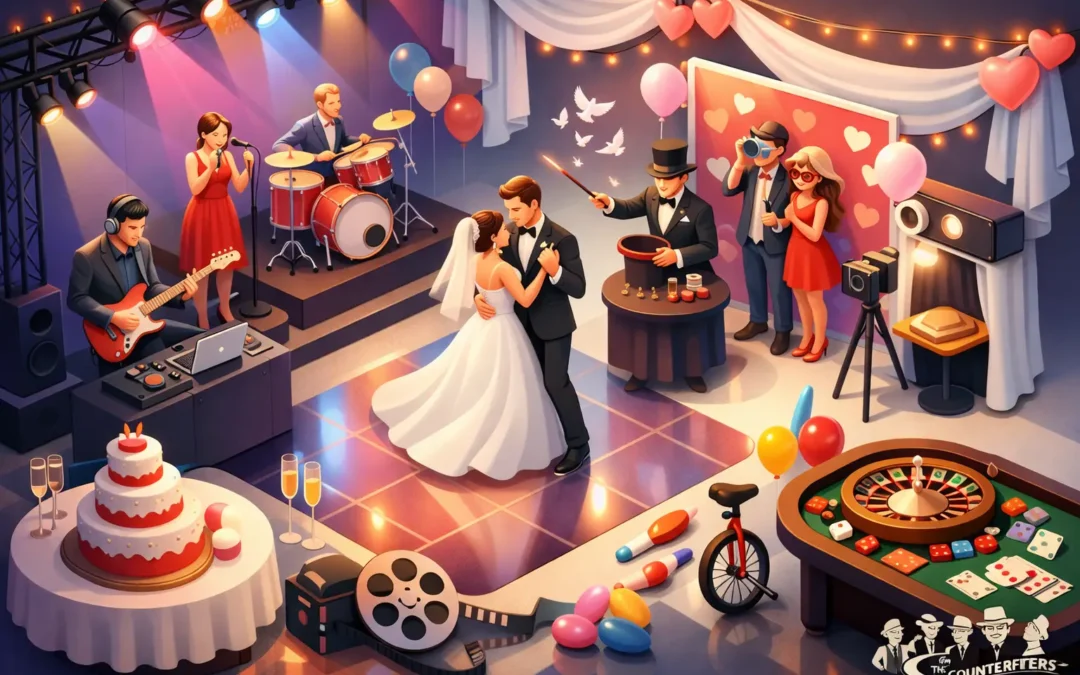
The room changes fast once dinner ends. One minute, guests are checking place cards and finding the bar. The next, they are deciding whether this wedding is going to be politely pleasant or genuinely electric. That is why a strong wedding reception entertainment guide matters – not just for picking music, but for shaping the entire energy of the night.
Great reception entertainment is not background filler. It sets pace, keeps people engaged between formalities, and gives different generations a reason to stay in the mix. If you get it right, the night feels easy. If you get it wrong, even a beautiful venue and great food can struggle to carry the room.
What a wedding reception entertainment guide should actually help you decide
Most couples start with one question: band or DJ? That matters, but it is only part of the story. The bigger question is what kind of experience you want guests to have from introductions to last call.
Some receptions are built for nonstop dancing. Others need a little more range – cocktail hour ambiance, polished MC work, smart transitions, and a dance set that builds instead of peaking too early. The best entertainment plan matches your crowd, your timeline, and the personality of the celebration.
A packed dance floor sounds simple, but it usually comes from a lot of good decisions made early. That includes the format of the entertainment, the set flow, the timing of speeches, whether you want interactive moments, and how much flexibility your entertainers bring once the room starts reacting in real time.
Band, DJ, or a hybrid setup?
A live band brings instant energy that is hard to fake. There is a visible connection between performers and guests, and that tends to raise the stakes in a good way. People do not just hear the music – they feel the room respond to it. For couples who want that big shared-party feeling, live music usually wins.
That said, not every band is built the same. Some are excellent musicians but weak at reading a crowd. Some can play a solid set, but they do not really know how to pace a wedding. That difference matters. A wedding band needs range, strong vocals, clean announcements, and enough experience to shift gears when the room changes.
A DJ can be a strong choice when you want exact original recordings, a lower footprint, or a more club-style flow. DJs also handle tight spaces well and can be easier to slot into a shorter timeline. But DJs vary widely in how they engage a room. Some keep things moving effortlessly. Others feel passive when the night needs a jolt.
The hybrid option is often the sleeper hit. Live music for key portions of the night, plus a DJ-style approach for breaks, after-parties, or very specific song moments, can give you flexibility without losing momentum. If your guest list includes everyone from college friends to older relatives who still love to dance, a flexible format can cover more ground.
The best wedding reception entertainment guide starts with the crowd
Your favorite songs matter, but your guest list matters just as much. A reception is one of the few parties where multiple age groups, friend groups, and family circles all need to feel included.
If your crowd is heavy on dancers, you can lean into high-energy sets earlier. If your guests are more mixed, the smartest move is usually a broad first run – recognizable hits, strong singalongs, and songs that pull people in without making anyone feel left out. A great entertainment team knows how to open the floor, not just how to keep it full once the dancers arrive.
This is where broad crowd appeal becomes more than a buzzword. It is not about playing it safe all night. It is about earning trust with the room so you can build bigger moments later. Weddings that work best tend to start familiar, then get bolder as the crowd loosens up.
Pacing beats perfection
A lot of couples spend months choosing songs and only a few minutes thinking about timing. That is backwards. The flow of the reception usually matters more than any one selection.
Long gaps between events can flatten the room. Too many speeches stacked together can make people drift. A first dance placed too late can throw off the energy, but pushing formalities too quickly can make the evening feel rushed. Good entertainment is as much about timing as talent.
Talk through the full reception arc. When will guests enter? When will introductions happen? Is dinner background-focused or interactive? When do you want dancing to begin in earnest? Are you doing parent dances back to back, or spacing them out? A seasoned entertainment team can help shape this flow so each moment lands without stalling the party.
MC work matters more than couples expect
A polished MC keeps the reception moving without turning it into a loud sales pitch. That balance is harder than it looks.
Good MC work means clear introductions, clean cueing, and enough personality to energize the room without hijacking it. It also means knowing when to get on the mic and when to disappear. Some couples want a big, high-impact presence. Others want someone confident but low-drama. Neither is wrong. The key is making sure your entertainment team can match your style.
If you are booking live entertainment, ask who handles announcements and transitions. Do they sound natural? Do they coordinate with planners, photographers, and venue staff? A band that crushes the dance set but fumbles the flow can create unnecessary stress.
Entertainment extras can work – if they fit the room
Not every reception needs bonus features, but the right one can add a real spark. Live band karaoke, themed late-night sets, guest singalongs, specialty dance moments, or era-based party segments can all work if they fit the couple and the crowd.
The trade-off is that extras should support the party, not interrupt it. If a feature feels gimmicky or overly scripted, guests will notice. The strongest additions are the ones that feel like a natural extension of the night.
For example, a couple that loves 80s and 90s music might build in a short nostalgia run that gets multiple generations singing along. A high-energy crowd might love a late-night shift into a more interactive, all-gas-no-brakes set. But if your reception is more formal and dinner-driven, simpler may be smarter.
Production counts, even when guests never mention it
People will remember the fun first, but production quality is what protects it. Sound levels, lighting, stage footprint, load-in timing, and backup planning all affect how the night feels.
Music that is too loud during dinner makes conversation hard. Music that is too soft during dance sets kills momentum. Lighting can help turn a ballroom into a party, but it should not feel like a nightclub unless that is what you want. Professionals know how to scale the setup to the room.
This is especially important in venues across New York, New Jersey, Philadelphia, and Connecticut where layouts vary wildly – from polished banquet spaces to waterfront properties and private estates. A flexible entertainment team should know how to adapt to different rooms without making the event feel improvised.
Questions worth asking before you book
You do not need to interrogate every entertainer, but a few direct questions can save you headaches. Ask how they handle set pacing, announcements, special requests, and timeline changes. Ask what happens if the room is slow to get moving. Ask whether they customize around your crowd or run the same show every night.
Also ask who you will actually be working with. In wedding entertainment, consistency matters. Experience matters too. A team that performs constantly tends to react faster, communicate better, and stay calmer when the schedule shifts.
That is one reason couples often lean toward proven, event-tested acts. A group like The Counterfeiters stands out when the goal is not just live music, but a full reception experience that keeps momentum high and guests engaged across the whole night.
Build for the night you want, not the checklist you inherited
There is a lot of wedding advice out there, and some of it is oddly rigid. The truth is, your reception does not need to follow every traditional beat to be successful. It needs to feel like a real celebration, with entertainment that fits your room, your people, and your version of a great party.
If you want elegance first and dancing later, build that. If you want a dance floor that opens early and never slows down, build that. The best choice is the one that feels natural when your guests are in the room, drinks are in hand, and the party is ready to break open.
Choose entertainment that can carry that moment with confidence. Guests may not remember every detail, but they will remember how the night felt.
Recent Comments