
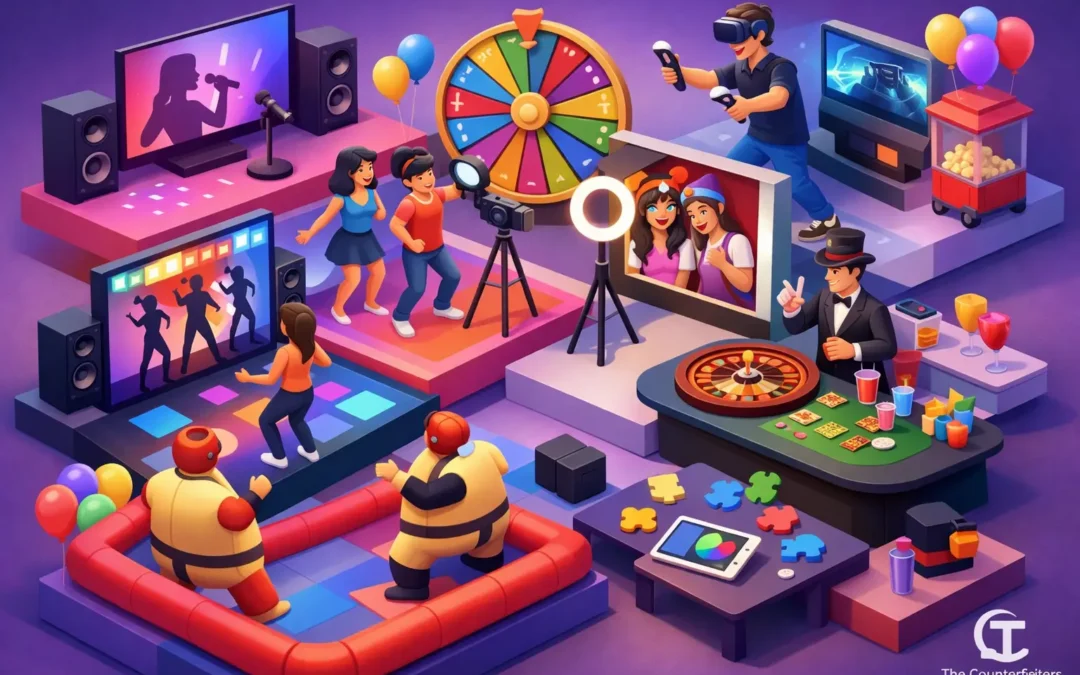
The moment guests stop checking their phones and start shouting song requests, laughing with strangers, or racing to join the action, your event changes. That is the real value behind the top interactive party entertainment ideas – they do more than fill time. They create momentum, break up awkward pockets, and turn a room full of attendees into an actual party.
If you are planning a wedding, corporate event, birthday, fundraiser, or venue night, interaction matters because passive entertainment has limits. People may enjoy watching a great performance, but the events they talk about later usually give them a way to jump in. The sweet spot is entertainment that feels polished without feeling stiff, and energetic without becoming chaotic.
What makes interactive entertainment actually work
Not every activity with audience participation lands. Some formats look fun on paper but stall in real time because they require too much explaining, appeal to only one age group, or put too much pressure on shy guests. The best interactive entertainment has a low barrier to entry. Guests should be able to understand it fast, join when they want, and feel rewarded immediately.
That is why music-based formats tend to outperform a lot of one-note novelty acts. Familiar songs, simple cues, and shared nostalgia pull people in fast. A packed dance floor is interactive by nature, but some entertainment formats take that crowd connection even further.
Top interactive party entertainment ideas that keep energy high
Live band karaoke
This one is a proven crowd-mover because it takes the familiar idea of karaoke and gives it real impact. Instead of guests singing over a canned backing track, they perform with a live band. The result feels bigger, more exciting, and a lot less like a side attraction tucked in a corner.
Live band karaoke works especially well for corporate events, milestone birthdays, and bar crowds because people can participate at different levels. One guest may jump onstage and own the room. Another may stay offstage and sing every chorus from the floor. Either way, the whole room gets involved.
The trade-off is that it needs strong emceeing and tight event flow. If song selection drags or transitions get messy, the energy dips. Done right, it becomes one of the strongest interactive options you can book.
Live music trivia
Trivia is already social. Add a live band, musical clues, and recognizable hits, and it becomes far more dynamic than a standard question sheet. Guests are not just sitting and writing answers. They are reacting to songs, debating with teammates, and getting pulled into the room’s rhythm.
This format is especially good for mixed-age groups because it can blend decades, genres, and challenge levels. It also works well when you want interaction without asking guests to dance all night. For a corporate crowd or networking event, that balance matters. People can engage without feeling like they are being forced into full party mode from minute one.
Audience-driven dance band sets
A strong party band is already interactive when the set is built around crowd response. Taking requests strategically, reading the room, calling guests onto the floor, and shaping medleys around audience reaction can turn a standard live music booking into something much more alive.
This works because it feels natural. Guests do not have to learn rules or line up for a turn. They simply respond. The right band knows when to lean into 80s singalongs, when to hit 90s dance tracks, and when to pivot toward today’s party staples so every age group gets a moment.
This is where experience matters. Crowd interaction is great, but only when it is guided by performers who know how to keep it moving. Too much open-ended participation can slow the show. The best bands make guests feel part of it while still controlling pace, quality, and flow.
Interactive formats that fit different event styles
Theme nights with built-in participation
An 80s night, 90s party, or decade-themed event gives guests an easy way to join the fun before they even walk in. They can dress for it, request songs around it, and connect over shared favorites. That kind of built-in participation is underrated because it starts interaction early.
Theme nights also make entertainment choices easier. Music, visuals, announcements, and even small contests can all pull in the same direction. For venue operators and private hosts, that usually leads to better turnout and stronger guest engagement than a generic party concept.
Music battles and singalong contests
If your crowd is competitive, this format can hit hard. Think table-versus-table singoffs, decade battles, or side-of-the-room challenges built around songs everybody knows. It is playful, quick to grasp, and great for groups that already have some chemistry.
This idea works best when the host keeps it light. You want guests laughing, singing, and cheering, not worrying about whether they are performing well. It is not about finding the best voice in the room. It is about creating those big collective moments where the crowd carries the entertainment.
Interactive DJ and live musician hybrid
Some events need the flexibility of a DJ but still want the visual punch and crowd connection of live performance. A hybrid setup can be a smart answer. The DJ keeps transitions efficient, while live musicians or vocalists step in to raise the energy during peak moments.
This is a strong option for weddings and corporate events with tight timelines because it covers a lot of ground. Cocktail hour, dinner, and full dance sets can each have a different feel without losing continuity. The key is making sure the hybrid format feels intentional, not pieced together.
Entertainment ideas that work beyond the dance floor
Game-show style hosting
For fundraisers, company parties, and social clubs, game-show entertainment can land really well. Guests like the structure because it is easy to follow, and hosts can adapt the tone from polished to rowdy depending on the room.
The best versions keep rounds short and participation broad. If only a handful of people are involved at once, the rest of the room checks out. If whole tables or teams can play along, energy stays much higher.
Interactive photo and video moments
This is not the most high-energy option on its own, but it works as a supporting layer. Short-form video booths, roaming event content stations, or themed photo activations give guests something to do between major entertainment beats.
The catch is that these moments should complement the party, not replace it. They are great for extending engagement and creating take-home memories, but they rarely carry the room by themselves. Pair them with live entertainment and they become much more effective.
Dance lessons that lead into the party
A quick, upbeat dance lesson can be a smart opener for weddings, Latin-themed events, and social celebrations where guests may need a little push. It breaks tension, gets people moving, and gives everyone permission to be part of the action.
The lesson needs to stay short. Once it starts feeling like class, you lose the room. The goal is not perfect technique. The goal is to get guests laughing, loosened up, and ready for the actual party.
How to choose the right interactive entertainment
The best choice depends on your crowd more than your personal preference. A corporate audience may love live music trivia because it encourages team play without putting too much pressure on individuals. A wedding crowd may respond better to a live party band with strong audience interaction because the night needs emotional highs, packed dance sets, and broad appeal across generations.
You also need to think about timing. Some entertainment is best as a feature. Live band karaoke can carry a large portion of the night. Other formats work better as a segment inside a bigger entertainment plan, like trivia during cocktail hour or a singalong battle before the dance floor fully opens.
Budget matters too, but cheapest is not always smartest. If interaction is central to the event experience, cutting corners on the host, band, or production usually shows. Guests forgive a lot, but they do not forgive flat energy.
Why live entertainment still leads the pack
There is a reason live entertainment stays at the top of so many event wish lists. It is flexible, responsive, and human. A great live act can stretch a moment that is working, recover one that is not, and read a room in real time. That matters more than any trendy gimmick.
For planners and hosts who want a room that feels busy, excited, and connected, the strongest interactive ideas usually involve live performers who know how to handle both the show and the crowd. That is where the real win is. Not just giving people something to watch, but giving them a reason to join in.
If you want guests talking about your event after the lights come up, pick entertainment that invites participation without forcing it. The best nights feel effortless from the floor, even when a lot of skill is driving them behind the scenes.
Recent Comments