
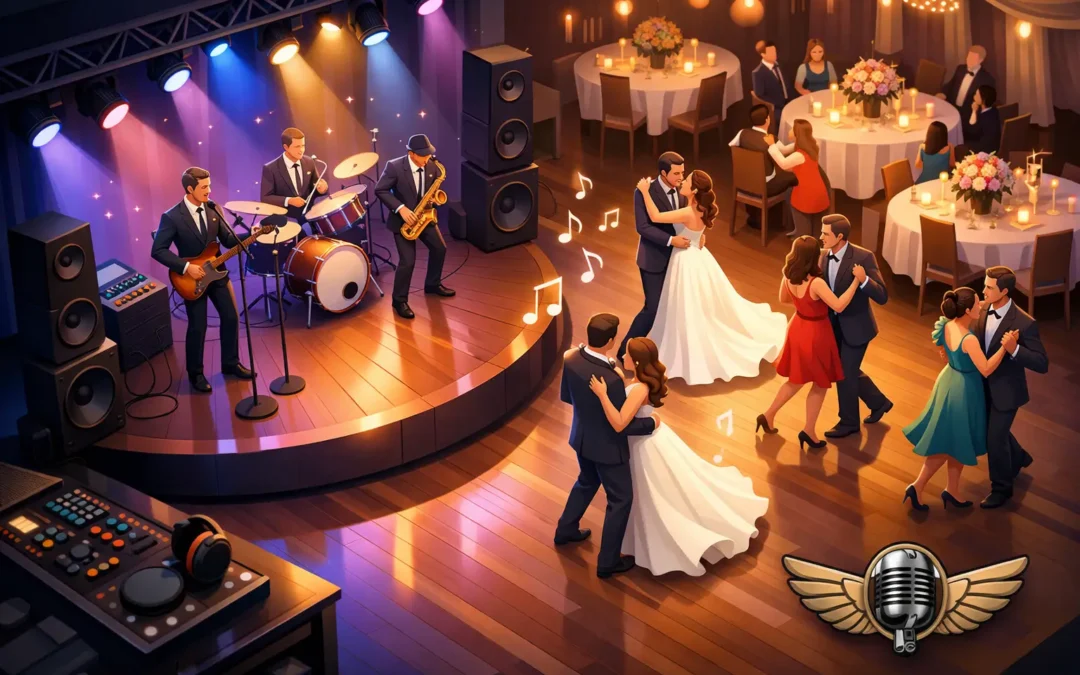
The cocktail hour is wrapping up, dinner plates are clearing, and your guests are ready for the moment the room changes gears. That is where smart entertainment planning earns its keep. Knowing how to plan live reception music is not about cramming every favorite song into one night. It is about building a show that meets the room where it is, then turns the energy all the way up.
A great reception has a pulse. Guests should have time to talk, eat, toast, sing along, and let loose without feeling like the music is working against the flow of the event. Whether you are planning a wedding, a corporate celebration, or a milestone party, the right live music plan gives every part of the night a purpose.
Start With the Room, Not Just the Playlist
Before choosing songs, consider the people and the setting. A packed dance floor at a black-tie wedding may look different from one at a waterfront party in New Jersey or a corporate event in Philadelphia, but the goal is the same: play music people recognize and want to move to.
Think about your guest mix. Are there college friends, parents, grandparents, coworkers, and kids all sharing the same room? Most receptions have a wider age range than hosts expect. That is why a set built entirely around one decade or genre can leave part of the crowd on the sidelines. A strong party band reads the room and moves naturally from timeless singalongs to current dance hits, with enough throwbacks to make every generation feel included.
The venue matters, too. A ballroom can handle a bigger opening moment and a full-band sound. A restaurant buyout or smaller private room may need a tighter footprint and more control over volume. Outdoor receptions bring their own questions: power access, stage cover, wind, neighborhood sound limits, and a rain plan. Bring these details to your band early. Great entertainment is exciting, but it should also fit the space professionally.
How to Plan Live Reception Music Around the Schedule
Your timeline is the backbone of the show. A live band can make the biggest moments feel huge, but only if everyone knows when they are happening. Share the reception schedule with your entertainment team well before the event, including guest arrival, introductions, dinner service, speeches, first dances, dessert, and the planned end time.
Give each part of the night a musical job
Cocktail hour music should welcome people in without swallowing conversation. Think upbeat, polished, and familiar rather than full-throttle party mode. This can be a smaller live format, a curated playlist, or a band performance tailored for mingling.
Introductions call for instant lift. Keep them moving. Long gaps between names or a complicated sequence can flatten the energy before the party even begins. Choose a song with a clear hook, let your emcee know the order, and get everyone into the room with purpose.
Dinner is not dead time. It is your chance to keep the mood warm while guests reconnect and recharge. Music during dinner should support the room, not compete with speeches or table conversation. Then, once formalities are finished, the band has a clean runway to build the dance floor.
If you are planning a wedding, consider whether the first dance happens immediately after dinner or later, when everyone is gathered around the floor. There is no universal right answer. An early first dance can create a beautiful transition into open dancing. A later one can feel more dramatic. Choose the timing that works with your crowd and your reception flow.
Build Energy in Waves, Not One Long Sprint
The biggest mistake hosts make is asking for nonstop high-energy music from the first note to the last. Even the most enthusiastic crowd needs pacing. A reception should rise, release, and rise again.
The first open-dance set is about invitation. Start with songs that are easy to recognize and impossible to overthink. This is not the time for deep cuts, long solos, or a niche music detour. You want the first wave of dancers to feel comfortable jumping in, because their energy gives everyone else permission to join them.
Once the floor is active, build into bigger anthems. Mix decades and styles strategically. A run of 80s rock, 90s pop, Motown favorites, country crossovers, and current hits can work beautifully when the transitions make sense and the band knows how to keep the momentum moving. The best live acts do not treat genres like separate boxes. They create a party out of the connections between them.
Later in the night, bring out the songs with maximum group payoff. These are the choruses guests shout with their arms around each other, the tracks that turn a good party into the story everyone tells on the ride home. Save a few of those big moments for the final stretch rather than spending every crowd favorite too early.
Make Requests Clear, Then Trust the Professionals
Your music preferences matter. Share the songs you love, the artists that mean something to you, and any must-play moments tied to your event. Just as valuable is a short do-not-play list. If there is a song that will clear your dance floor, bring back an awkward memory, or simply does not fit your vibe, say so upfront.
Keep both lists focused. A request list with 80 songs can accidentally turn into a set-by-set instruction sheet, and that makes it harder for a band to react to the live crowd in front of them. Give your musicians the guardrails, then let them use their experience. A song that seemed perfect on paper may not be right for the room at 10:15 p.m. A seasoned band knows when to pivot.
Be specific about non-negotiables. If you want a particular first-dance song performed live, ask whether the band can deliver it in the right style. If you want a special cultural song, a parent dance, an anniversary dance, or a surprise performance, confirm the plan early. Last-minute changes are possible sometimes, but advance notice gives the band time to prepare properly.
Plan the Logistics That Protect the Party
Great receptions look effortless because someone handled the details. Confirm the performance start and end times, break schedule, stage location, load-in route, parking, green room needs, and power requirements. Your planner, venue coordinator, and band should all have the same timeline and a direct contact for event-day questions.
Ask how breaks are handled. Many professional bands provide curated music between live sets, so the energy does not disappear when the musicians step offstage. If the reception runs late or you want an after-party, discuss those options in advance rather than assuming the band can extend on the spot.
Volume deserves an honest conversation. You want a band that can bring the party, but the ideal volume depends on your venue, guest count, and local rules. A capable live act can adjust without losing impact. The goal is a full dance floor, not guests shouting across the dinner table.
Choose Entertainment That Can Read a Mixed Crowd
A reception band is more than a group that knows songs. The difference is in the room reading, transitions, vocal range, emcee skill, and confidence to change direction when the crowd tells them what it wants. Look for performers with a broad repertoire and real experience across weddings, corporate events, bars, and private celebrations.
Ask how they handle requests, announcements, special dances, and different age groups. Watch for evidence that they understand pacing, not just performance. The Counterfeiters, for example, build shows around recognizable hits, big audience interaction, and flexible formats because no two crowds arrive ready to party in exactly the same way.
If your event has a clear theme, lean into it. An 80s or 90s night, decades show, live band karaoke set, or music trivia feature can give guests something memorable beyond a standard reception format. The trade-off is focus: a themed experience is fantastic when it matches your guests, but a broad dance set is usually the safer choice for a mixed-age wedding crowd.
Leave Room for the Moments You Cannot Schedule
The strongest reception music plans have structure without feeling scripted. Set the key moments, communicate the essentials, and give your band enough freedom to follow the real energy in the room. That flexibility is where the magic happens: the spontaneous singalong, the surprise song that fills the floor, the final chorus that brings everyone together.
Plan for your guests, not an imaginary perfect playlist. When the music feels familiar, the timing feels right, and the performers know how to lead a room, your reception will not just sound good. It will feel like a party from the first entrance to the last song.
Recent Comments